


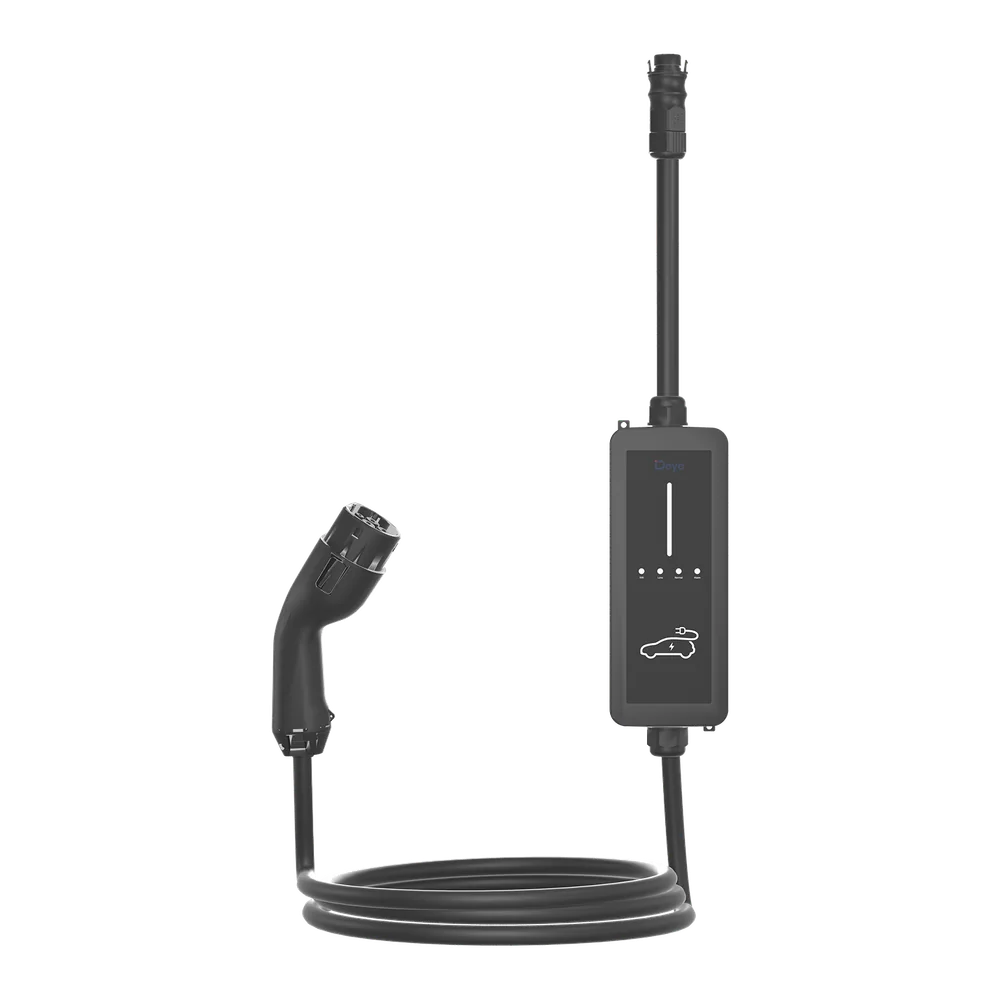
Deye product images. The 11 kW and 22 kW chargers look the same.
Deye EV Chargers
Deye 11kW Smart EV Charger
SUN-EVSE11K01-AC · Australian model
The SUN-EVSE11K01-AC is Deye’s 11 kW smart AC charger for home. It charges at up to 3.5 kW on a single-phase supply and 11 kW on three phase, through a tethered Type 2 cable.
Smart TX, Wireless CT and installation sold separately.
- Owned and operated by Aussie electricians
- Advice from the electricians who install Deye
Place your order and we email a secure payment link, normally within one business day. Nothing is charged until you pay the link. Delivery is quoted for this item alone, or free with an inverter or battery order. Installation is separate. Online Deye Price Beat Guarantee — seen it cheaper? Tell us before you order.
Want a licensed electrician with Deye experience to install this? Click to connect with a Deye installer
What will it charge at your place?
A charger only delivers what your supply and your car accept. Pick both to compare the two models, before you buy either.
11 kW model
Faster here3.5 kW
- Range added per hour
- about 20 km
- Time to add 30 kWh
- 9 h 30 min
This page
22 kW model
Faster here7 kW
- Range added per hour
- about 35 km
- Time to add 30 kWh
- 4 h 45 min
Here the 22 kW model charges twice as fast as the 11 kW model.
An estimate, not a guarantee. It assumes 17 kWh per 100 km and about 10% charging losses. Charger limits are from Deye’s Australian datasheet. Your electrician confirms what your supply and switchboard can take.
Charge from your own solar
There are three ways to set it up, depending on the solar you already have. We’ll confirm the right one for your home.
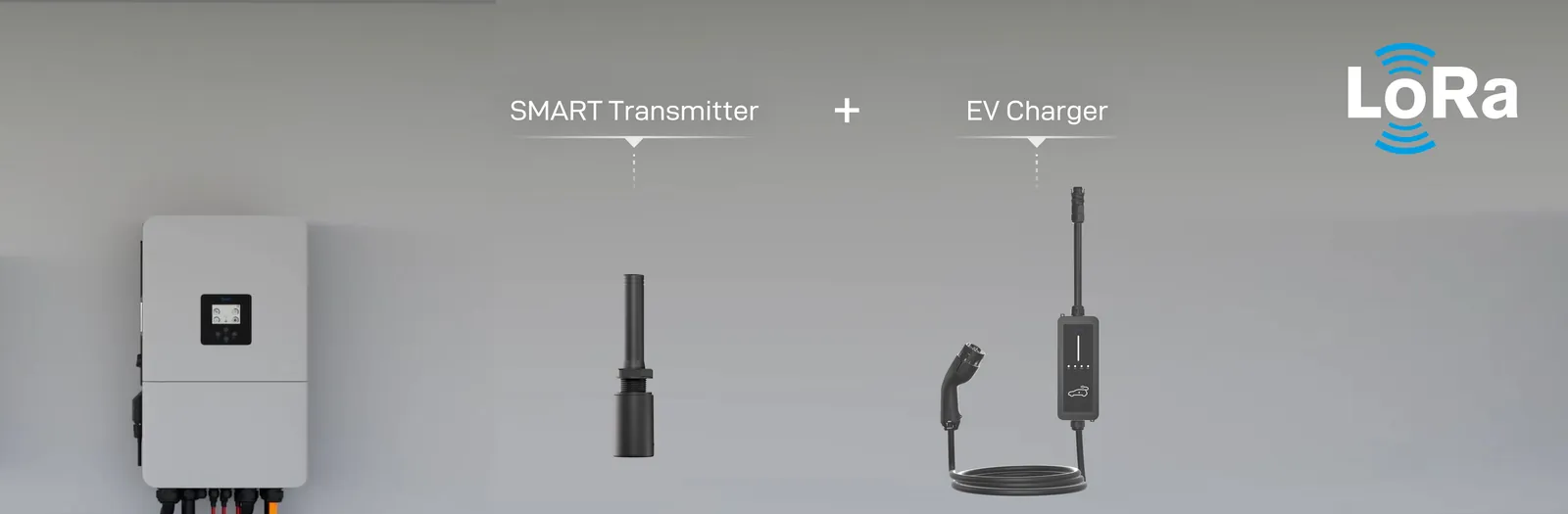
1. Deye hybrid inverter
Run it from your inverter
Plug a Deye Smart TX into your hybrid inverter. The inverter then controls the charger over LoRa, with no data cable and no extra gateway.
- Solar
- Hybrid inverter + Smart TX
- LoRa
- Charger
- Car
- Plug & Play, scheduled and solar-only charging
- Settings on the inverter screen and in Deye Cloud
- Stops below a battery level you set in a blackout
You’ll need a Deye Smart TX and current inverter firmware. Not every Deye hybrid accepts a Smart TX, so we check your model first.
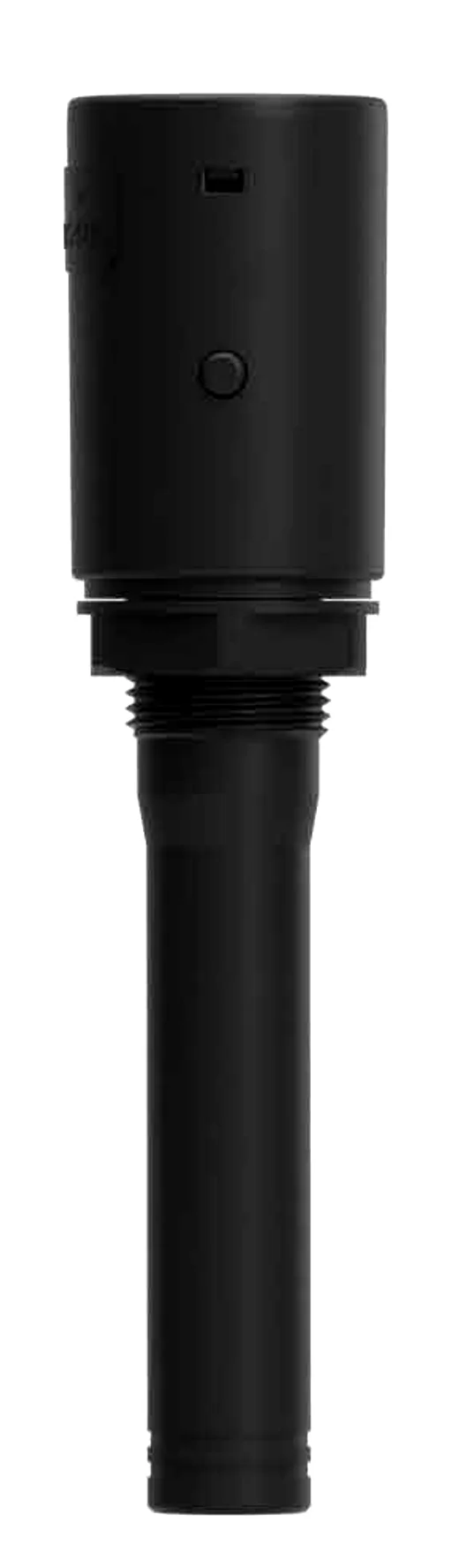
2. String or microinverter
Add it to the solar you have
A Deye Wireless CT in your switchboard measures surplus solar and signals the charger over LoRa. It works beside other brands’ string inverters and microinverters. No Smart TX needed.
- Solar
- String or microinverter
- Switchboard + Wireless CT
- LoRa
- Charger
- Car
- Solar-only charging from your surplus
- Plug & Play charging whenever you need it
- Scheduled charging isn’t available in this set-up
You’ll need a Deye Wireless CT. Ask us and we’ll confirm the right Australian model for your switchboard.
3. No solar needed
Use it on its own
Connect the charger to your home Wi-Fi and run it from the Deye Cloud app. Bluetooth lets you pair it nearby without a network.
- Grid
- Switchboard with RCD
- Charger
- Car
- Wi-Fi to Deye Cloud
- Plug & Play charging
- Scheduled charging from the app
- Charging history and remote control
Add a Deye hybrid inverter or a Wireless CT later and it can charge from solar.
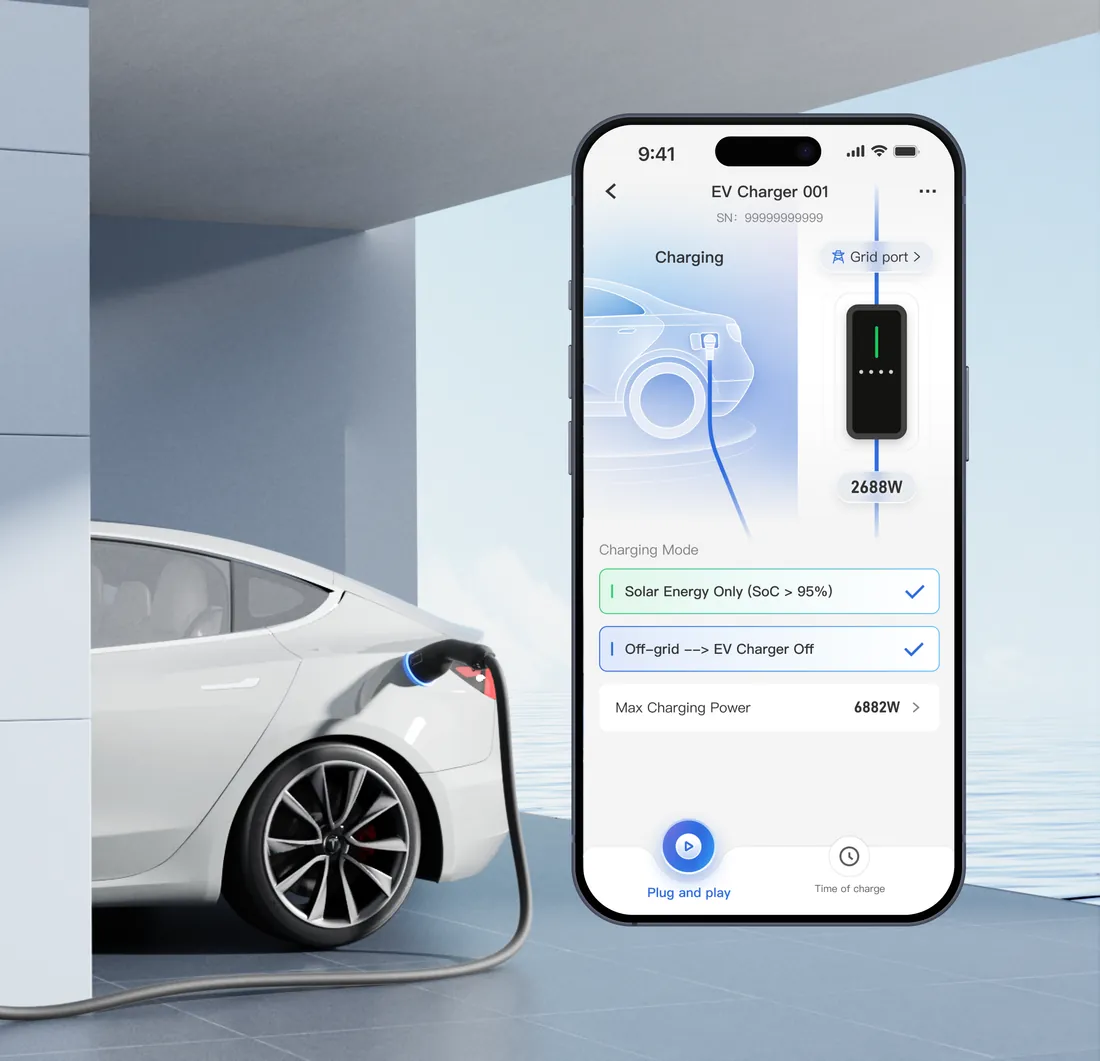
Four ways it can charge
Plug & Play
Plug in and charging starts, up to the maximum power you set. With a Deye hybrid, solar, battery and grid can all supply it.
Scheduled charging
Up to four time windows a day, to match cheaper tariff periods.
Solar energy only
Charges from surplus solar. With a Deye hybrid it starts once your battery reaches 99% and stops below 95%.
Off-grid cut-off
In a blackout it stops below the battery level you choose, so your home keeps its backup.
Mode availability depends on the set-up above. Deye’s user manual in Documents describes each setting.
Built for Australian homes
The SUN-EVSE11K01-AC is Deye’s 11 kW smart AC charger for home. It charges at up to 3.5 kW on a single-phase supply and 11 kW on three phase, through a tethered Type 2 cable. Pair it with a Deye hybrid inverter and Smart TX, or with a Wireless CT beside any string or microinverter, and it can charge your car from surplus solar.
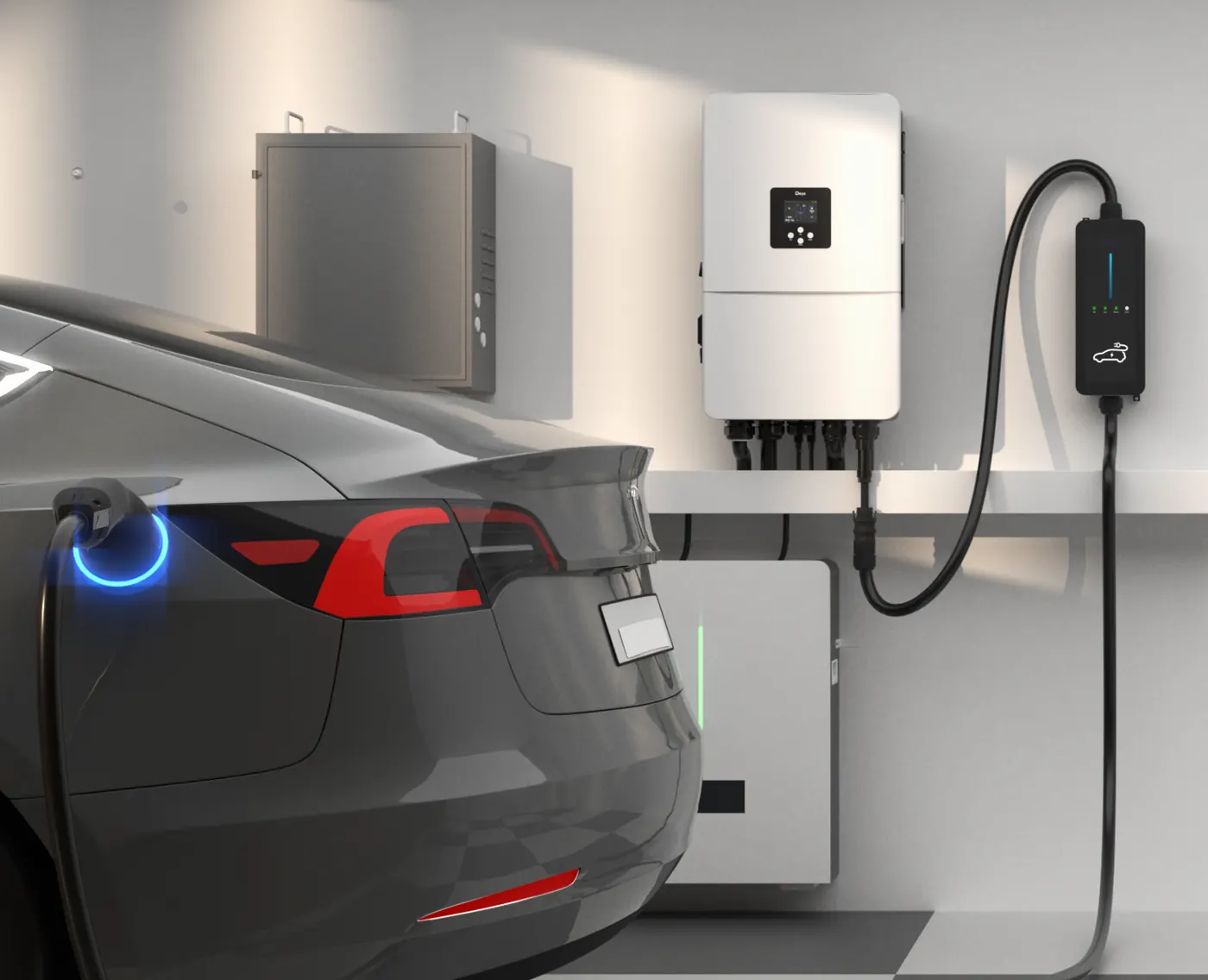
Solar-ready
Sits beside your Deye system
Wire it to your Deye hybrid inverter’s backup or grid port and pair it over LoRa. Your inverter screen and the Deye Cloud app then show the charger with your solar and battery.
- 920–928 MHzAustralian LoRa band
- 1EV charger per Smart TX
- ≈200 mSmart TX range in clear space
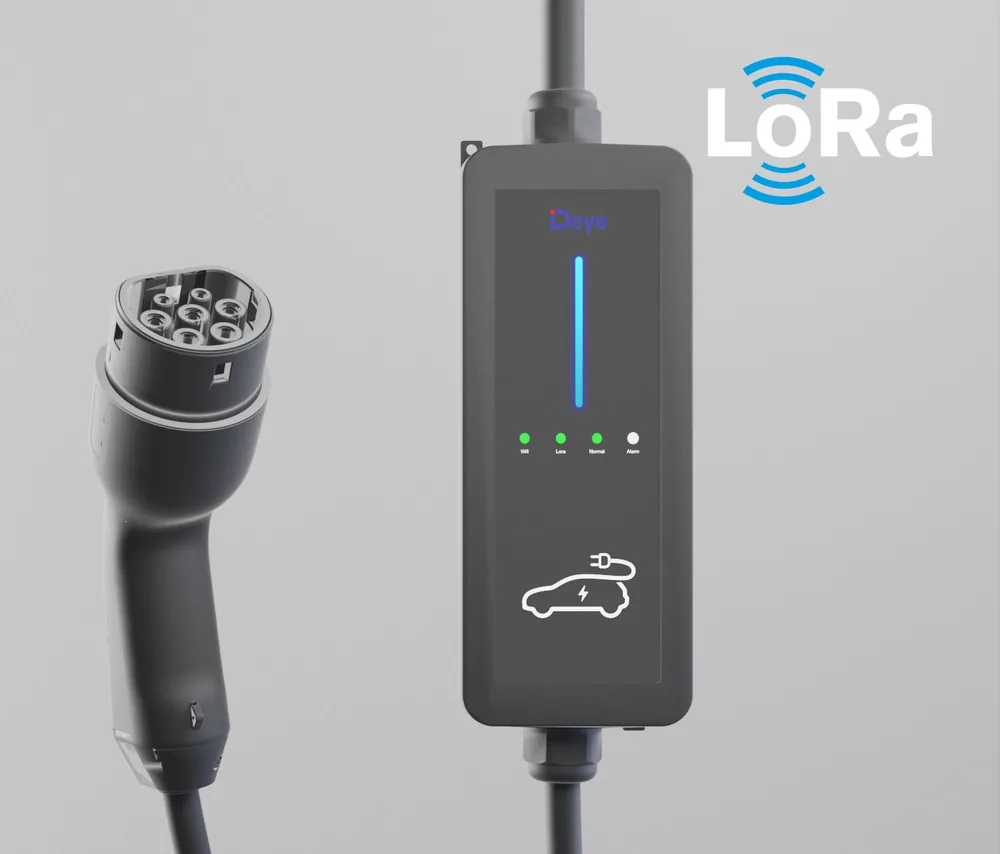
Built for outdoors
Type 2 plug on a 4.2 m cable
A tethered Type 2 plug, the AC connector used by most EVs sold in Australia. The light strip shows the mode at a glance: blue for Plug & Play, green for scheduled charging, white while updating and red after an emergency stop.
- IP66Dust-tight, water-jet rated
- −40 to +55 °COperating range
- <25 dBNoise while charging
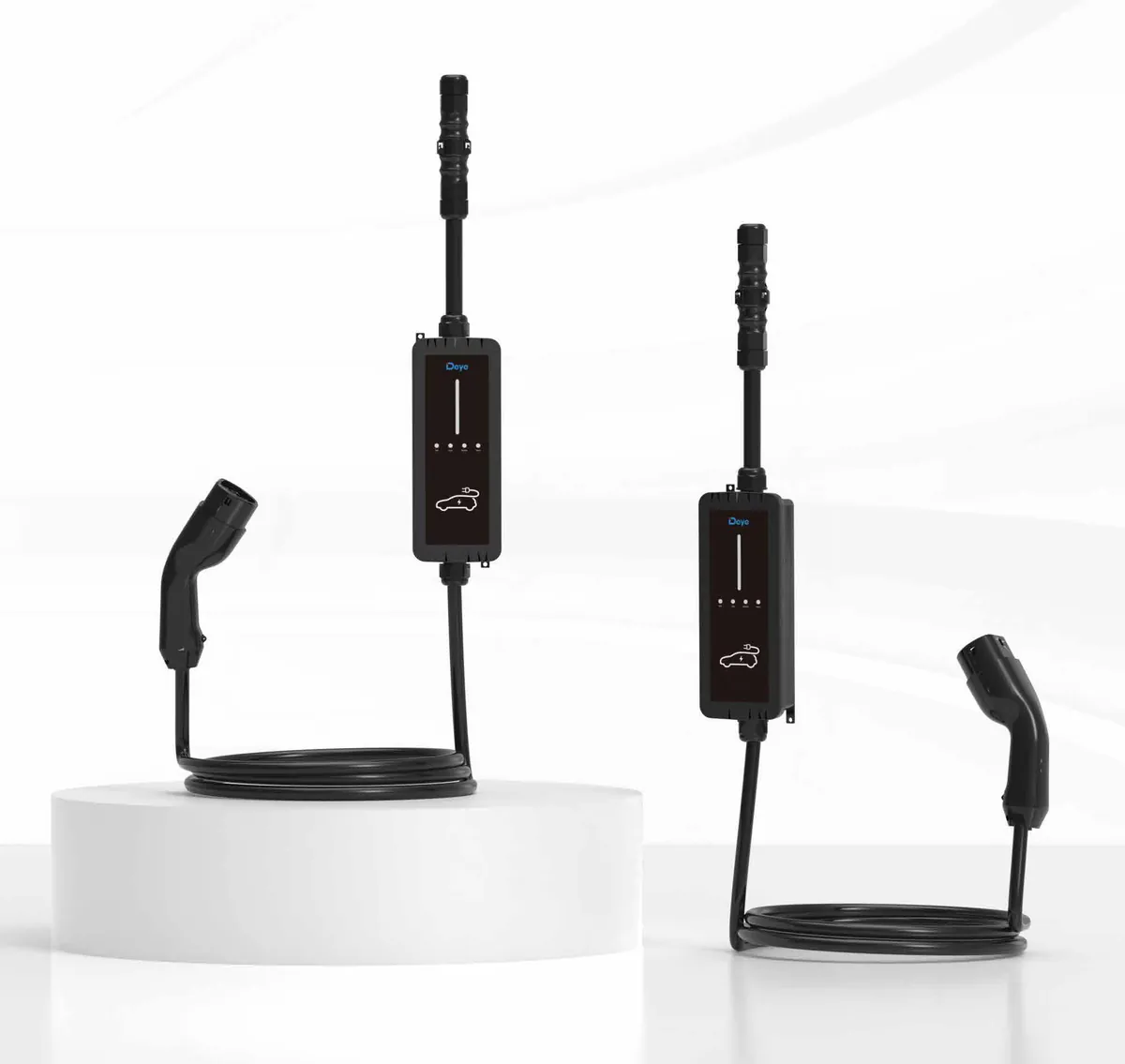
Two power levels
One design, two currents
The 11 kW and 22 kW chargers look identical. The 22 kW model draws 32 A a phase against 16 A, so it charges twice as fast on single phase and on three phase.
- 3.5 / 7 kWSingle phase
- 11 / 22 kWThree phase
- 3.7 kg104 × 264 × 58 mm box
Safety built in
Type B leakage protection
6 mA DC fault detection built in.
Type II surge protection
Guards against voltage spikes on the supply.
Voltage protection
Stops on over- or under-voltage.
Overload and short circuit
Cuts out before cables overheat.
Earth fault protection
Monitors the earth connection.
Temperature protection
Stops when too hot or too cold.
The button on the charger is also an emergency stop. Your electrician adds a 30 mA Type A RCD and a circuit breaker on the charger’s circuit, as Deye requires.
11 kW or 22 kW?
Same charger, different current. On single phase the 22 kW model is twice as fast. On three phase the 11 kW model is enough for most cars, which accept 11 kW or less.
| Feature | 11 kWSUN-EVSE11K01-AC · this page | 22 kWSUN-EVSE22K01-AC |
|---|---|---|
| Price | $728.00 incl. GST | incl. GST |
| Maximum output, single phase | 3.5 kW | 7 kW |
| Maximum output, three phase | 11 kW | 22 kW |
| Rated current | 16 A | 32 A |
| Best suited to | Three-phase homes with an 11 kW car | Single-phase homes, single-phase cars and 22 kW cars |
| Connection | L+N+PE or 3L+N+PE | L+N+PE or 3L+N+PE |
| Connector and cable | Type 2, tethered 4.2 m | Type 2, tethered 4.2 m |
| Communication | LoRa, Wi-Fi, Bluetooth | LoRa, Wi-Fi, Bluetooth |
| Protection | IP66, Type B leakage, Type II surge | IP66, Type B leakage, Type II surge |
| Size and weight | 104 × 264 × 58 mm, 3.7 kg | 104 × 264 × 58 mm, 3.7 kg |
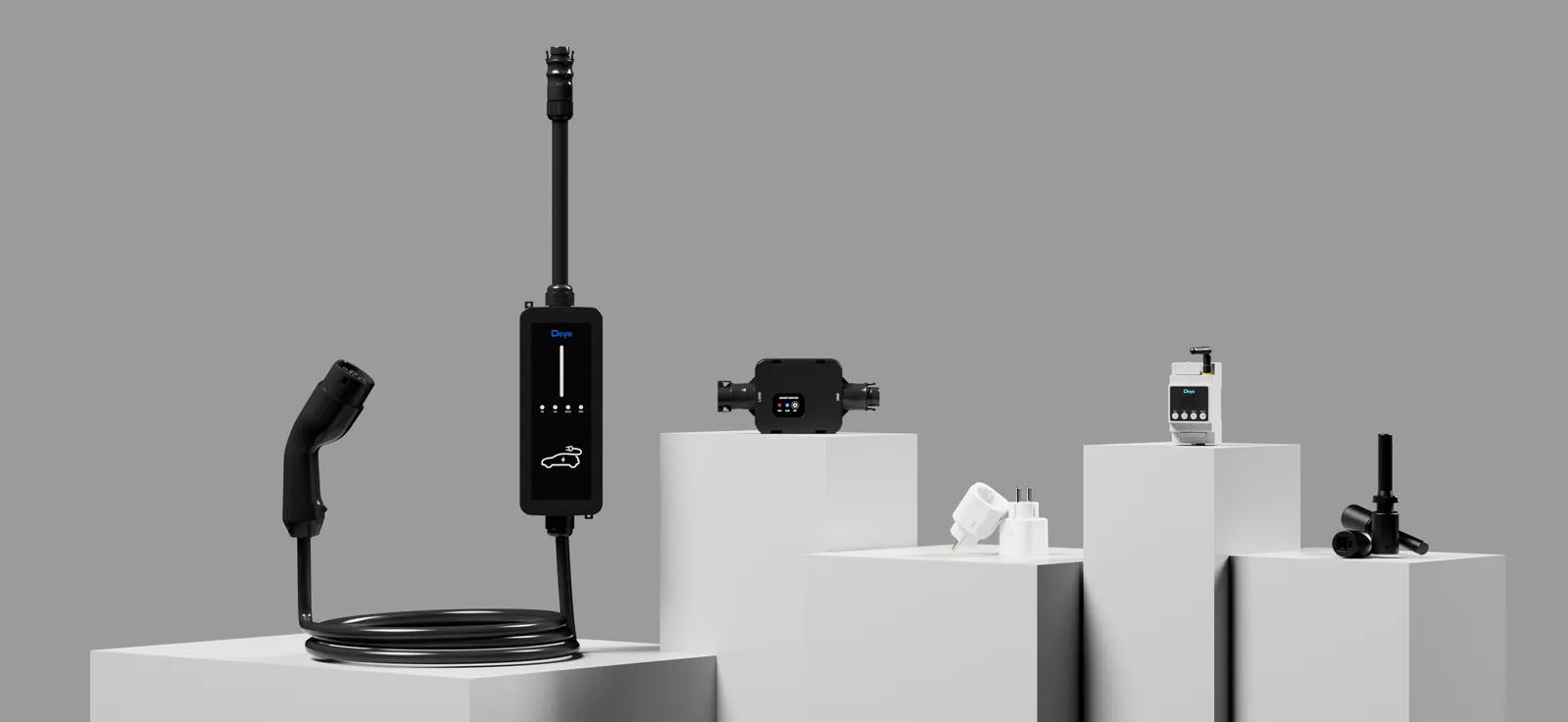
Part of Deye’s wireless energy system
The same LoRa link runs Deye smart switches, smart plugs and Wireless CTs, so hot water, a pool pump or the car can wait for your solar. One Smart TX handles one EV charger, two Wireless CTs and up to ten smart plugs and switches.
About the Deye Smart TXWhat your electrician will do
- Check your supplySingle or three phase, switchboard capacity, and your network’s rules for EV chargers.
- Run a dedicated circuitWith a circuit breaker and a 30 mA Type A RCD, sized to the Australian wiring rules.
- Mount the chargerOn a wall, out of direct sun with good airflow, away from bedrooms.
- Connect and pairTo the grid, or your Deye hybrid inverter’s backup or grid port. Then pair it with the Smart TX, or with your Wi-Fi.
- Set your limitsMaximum charging power, charging mode and the off-grid battery level.
SUN-EVSE11K01-AC specifications
Ratings come from Deye’s Australian datasheets, which list this exact model number. Wiring, charging modes and indicator lights come from Deye’s June 2026 user manual.
| Everest SKU | SUN-EVSE11K01-AC |
|---|---|
| Product type | EV Charger |
| Maximum output, single phase | 3.5 kW |
|---|---|
| Maximum output, three phase | 11 kW |
| Rated current | 16 A |
| Rated voltage | 230 V single phase; 230/400 V three phase |
| Connection | L+N+PE or 3L+N+PE |
| Frequency | 50 Hz (45–55 Hz) or 60 Hz (55–65 Hz) |
| Starting methods | Plug & Play or scheduled charging |
| Connector | Type 2, one tethered charging cable |
| Charging cable length | 4.2 m |
| Leakage protection | Type B, with 6 mA DC fault detection |
|---|---|
| Surge protection | Type II |
| Also monitored | Over- and under-voltage, overload, short circuit, earth fault, over- and low temperature |
| Required on the supply circuit | Circuit breaker and 30 mA Type A RCD (Deye manual) |
| Ingress protection | IP66 |
|---|---|
| Operating temperature | −40 to +55 °C |
| Humidity | 5–95%, non-condensing |
| Altitude | Up to 3,000 m |
| Noise | Below 25 dB |
| Charger box (W × H × D) | 104 × 264 × 58 mm |
| Weight | 3.7 kg |
| MTBF | 100,000 hours |
| Communication | LoRa, Wi-Fi (2.4 GHz) and Bluetooth |
|---|---|
| LoRa band | 920–928 MHz, internal antenna |
| App | Deye Cloud |
| Certifications listed by Deye | RCM, CE, FCC |
| Charging standards | EN IEC 61851-1:2019, IEC 61851-1:2017, EN IEC 61851-21-2:2021 |
Product selection and installation must be checked for your site.
SUN-EVSE11K01-AC spec sheets and documents
Deye’s Australian datasheet for this exact model, the wireless energy system sheet and the user manual. Read them here, or download a copy.
Open as PDF: Deye Smart EV Charger SUN-EVSE11K01-AC / SUN-EVSE22K01-AC — Australian datasheet · Deye wireless energy management system — Australian datasheet · Deye EV AC Charger user manual — June 2026 edition
The document will load when you reach this section.
Questions about this charger?
Tell us about your supply, your car and your solar. The model number travels with your enquiry.
Which model suits my home, 11 kW or 22 kW?
Most homes have a single-phase supply. On single phase the 22 kW model charges at up to 7 kW and the 11 kW model at up to 3.5 kW. On three phase they reach 22 kW and 11 kW. Your car can set a lower limit, so check its onboard AC charging rating, or use the charging-speed check on this page.
Will it really charge at 22 kW?
Only on a three-phase supply, and only if your car’s onboard charger accepts 22 kW of AC power. Few cars do. Many accept 7 kW or 11 kW, and the car always sets the limit.
Do I need a Deye inverter?
No. On its own the charger joins your Wi-Fi and you control it in the Deye Cloud app. With a Deye hybrid inverter and a Deye Smart TX, the inverter controls it over LoRa and it can charge from your solar. With a string inverter or microinverter, including other brands, a Deye Wireless CT in your switchboard enables solar-only charging.
Can it charge from solar only?
Yes, in Solar energy only mode. With a Deye hybrid inverter, charging starts once your home battery reaches 99% and stops if it falls below 95%, so the house keeps its storage. While charging it never drops below 6 A, the minimum for AC charging, so when the sun dips the difference comes from your battery or the grid.
Does it keep working in a blackout?
Connected to the backup (load) port of a Deye hybrid inverter, it can keep charging from solar and battery while the grid is down. The off-grid setting turns the charger off below a battery level you choose, so your home keeps its backup. Connected on the grid side, it stops with the grid.
Can it be installed outside?
Yes. It is rated IP66 and works from −40 to +55 °C. Deye recommends a spot out of direct sunlight with good airflow, away from bedrooms and living areas, because it makes some noise while charging.
What does my electrician need to install?
A dedicated circuit with a circuit breaker and a 30 mA Type A RCD. The charger already detects 6 mA DC leakage, but Deye requires the RCD as well. Your electrician sizes the cable and protection to the Australian wiring rules and checks your network’s rules for EV chargers.
Is this the Australian version?
Yes. Deye’s Australian datasheets list SUN-EVSE11K01-AC by this exact model number, with RCM and a LoRa radio on the Australian 920–928 MHz band. European versions end in -EU-AC and use a different LoRa band.
Will it fit my car?
It has a tethered Type 2 plug on a 4.2 m cable. Type 2 is the AC charging connector used by most EVs sold in Australia. Check your car’s charging port and its onboard AC charging limit in the owner’s manual.
How do I control it?
In the Deye Cloud app, on your Deye inverter’s screen once paired, or with the button on the charger, which is also an emergency stop. The light strip shows the charging mode, firmware updates and faults.
Does it support OCPP?
Deye’s Australian documents for this model list LoRa, Wi-Fi and Bluetooth. They do not list OCPP. If a program or site requires OCPP, ask us before you buy.
Can I order this on its own?
Yes. Add it to your cart, continue to checkout and place your order. We confirm stock and email you a secure payment link, normally within one business day. Nothing is charged until you pay the link. Delivery is free on inverter or battery orders and quoted for parts-only orders. Any installation is arranged separately.
Can Everest help with compatibility?
Yes. Include the model numbers of your existing inverter, batteries and any other system parts in your enquiry. Matching a brand or power rating alone does not confirm compatibility.
More Deye EV chargers
View the 22 kW model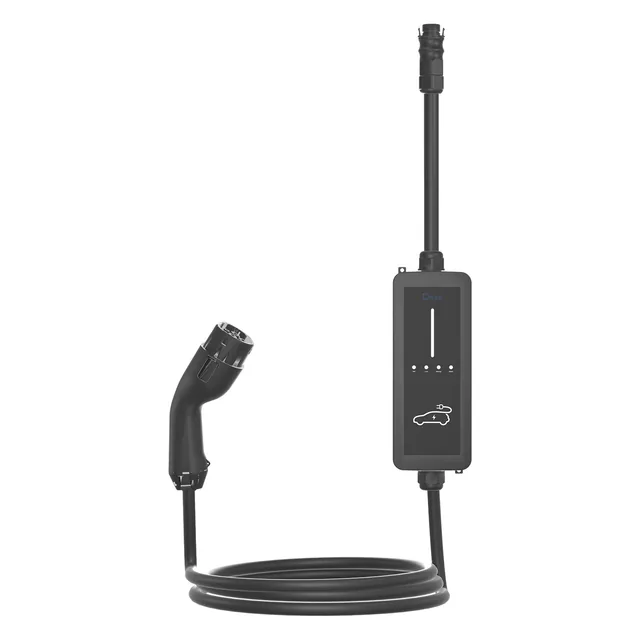 EV Charger22kW AC EV Charger
SUN-EVSE22K01-AC