


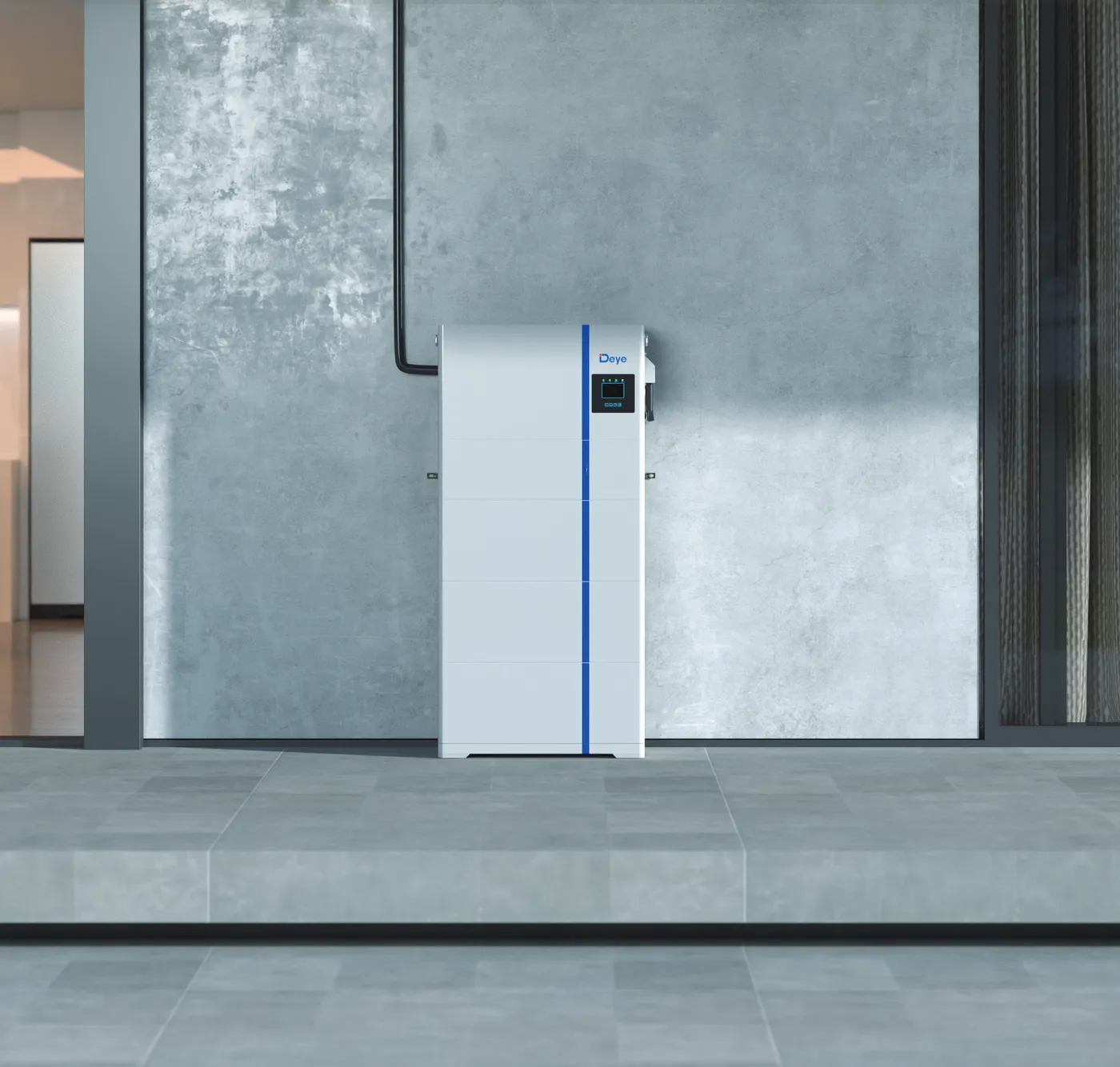
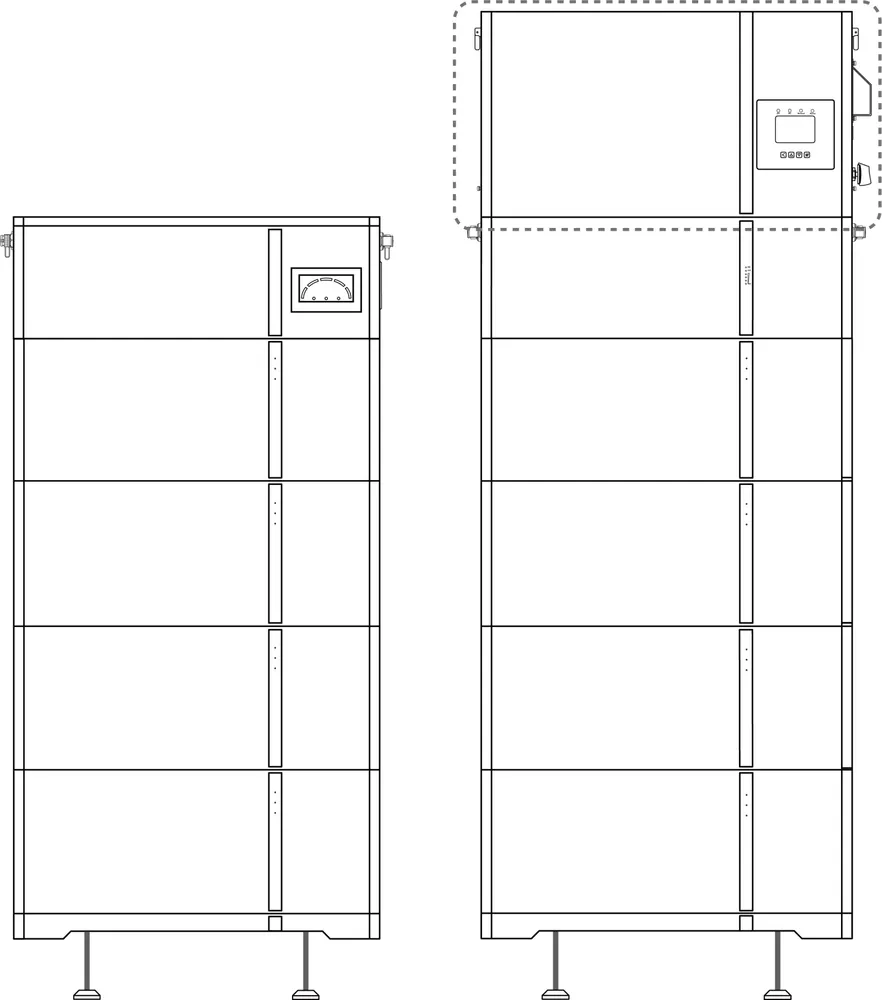
Deye render, product image and drawing, and Deye Australia project photos. Check the model number for the exact item.
- Deye Hybrid InvertersWall-mounted inverter, batteries alongside
- Deye AIO Hybrid InvertersInverter sits on top of the battery stack
Your installer confirms the final system and site requirements.
Deye Batteries · AI-W5.1 stackable
Deye AI-W5.1-B 5.12 kWh Battery
AI-W5.1-B
One 5.12 kWh module of Deye’s stackable battery. Stack two to ten under a Deye all-in-one inverter in our Designer, or one to six beside a wall-mounted Deye hybrid.
Inverter, cables and any required PDU/base sold separately.
Not sure how many you need? Get it designed
- Owned and operated by Aussie electricians
- Advice from the electricians who install Deye
Place your order and we email a secure payment link, normally within one business day. Nothing is charged until you pay the link. Free delivery included. Installation is separate. Online Deye Price Beat Guarantee — seen it cheaper? Tell us before you order.
Want a licensed electrician with Deye experience to install this? Click to connect with a Deye installer
How many modules do you need?
Each module adds 5.12 kWh. Pick what you would run during a blackout or overnight, then set the stack: we show how long it lasts, whether the stack can supply it, and how it goes together.
4 modules (20.48 kWh) run all of this for about 5 h 40 min.
A stack of 4 is rated for 10 kW, which covers 3.05 kW.
Build a system with 4 modules in the DesignerAn estimate, not a guarantee. Appliance figures are typical running power. The runtime assumes about 85% of the battery’s nominal kWh reaches your appliances, and the inverter’s own rating also limits what runs at once. Stack ratings are from Deye’s AI-W5.1-B datasheet. Beside a wall-mounted Deye hybrid, modules stack up to six on a PDU1 base instead.
Four ways to use it
The AI-W5.1-B is the battery under Deye’s all-in-one inverters, and it can sit beside a wall-mounted Deye hybrid too. We’ll confirm the right set-up for your home.
With an all-in-one
The battery the all-in-one stands on
Deye’s AI-W5.1 all-in-one inverters sit on top of their own battery stack: AI-W5.1-B modules on a PDU3 base, with no wiring between the modules. Our Designer builds two to ten: five under the inverter, and from six a second stack on a PDU1 base.
- 10.24 to 51.2 kWh in the Designer
- Single or three phase, 5 to 12 kW
- No wiring between the stacked modules
You’ll need an AI-W5.1 inverter and a PDU3 base. The Designer lists every part with its price.
Existing solar
Add a battery to the solar you have
AC coupling connects your existing solar inverter to a Deye all-in-one, so its surplus charges the AI-W5.1-B stack. Keep your panels and your current inverter.
- Keep your panels and current inverter
- Surplus solar charges the stack
- New panels can go on its own inputs too
We check your existing inverter, switchboard and export limit before you order.
With a wall-mount hybrid
A stack beside a wall-mounted Deye hybrid
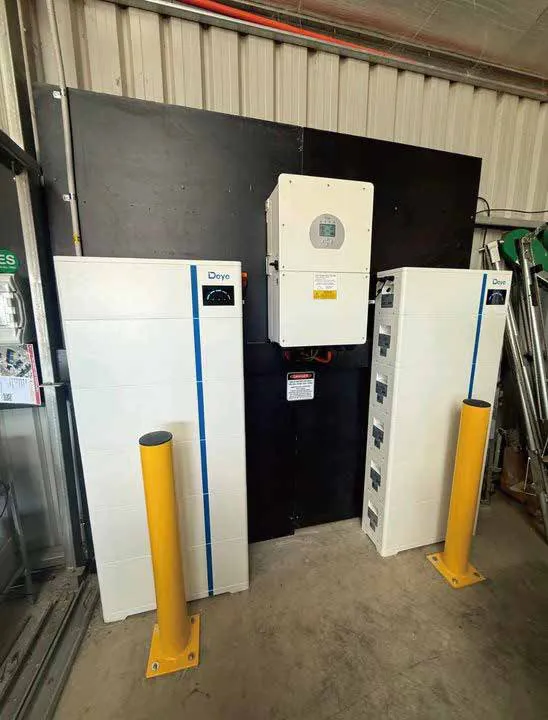
Deye’s datasheet also stacks the modules on a PDU1 and base, with its cable to a hybrid inverter: one to six modules a stack, and up to 6 stacks in parallel. Deye Australia’s project photos show it with the SUN-8K-SG05LP1-AU and SUN-10K-SG02LP1-AU.
- One to six modules a stack (5.12 to 30.72 kWh)
- Up to 6 stacks in parallel: 36 modules, 184 kWh
- Wall or floor mounted
Send us your inverter model first. We check the match, the cable and the quantity before you order.
Blackouts
Backup in 4 milliseconds
With an all-in-one, if the grid drops the inverter moves your backup circuits to solar and the stack. Deye’s AI-W5.1 datasheet gives a switching time of 4 ms, and every module you add makes the backup last longer.
- Backup circuits stay on
- Switches over in 4 ms
- More modules, longer backup
Your electrician moves the circuits you want kept on to the inverter’s backup port. It is not the whole house unless the system is designed that way.
Built to stack, built to last
A 5.12 kWh LFP module that stacks into a home battery: 10.24 kWh and up under an all-in-one, up to 30.72 kWh in one stack beside a wall-mounted hybrid, and more in parallel.
Installation
Stacks with no wiring
Each module sits on the one below, with no wiring or extra fixing screws between them. The base goes on a level floor, the modules stack on it and the PDU goes on top: then the all-in-one inverter, or Deye’s cable to a wall-mounted hybrid.
- 720 × 300 × 255mm per module, W × H × D
- 53 kgPer module
- 1 to 6Modules a stack
Inside
LFP cells, managed module by module
Each module holds 5.12 kWh of cobalt-free lithium iron phosphate (LFP) cells at 51.2 V. Its battery management system (BMS) watches every cell’s voltage, current and temperature and balances them as they charge, and a 125 A 2P circuit breaker is built in.
- 5.12 kWhPer module
- 51.2 VNominal voltage
- 100%Recommended depth of discharge
At home
Rated IP65 once stacked
Deye rates the stacked battery IP65, with natural cooling. It discharges from −20 to 55 °C and charges from 0 to 55 °C (−20 to 55 °C with heating on). The modules network themselves as they stack, and Deye supports remote monitoring and firmware updates.
- IP65After stacking
- −20 to 55 °CDischarging
- NaturalCooling
Life and safety
≥ 6,000 cycles
At 25 °C, 0.5C charge and discharge and 90% depth of discharge, until a module holds 70% of its capacity.
16 MWh
Energy through each module over that life, from Deye’s datasheet.
Built-in breaker
125 A 2P, 60 V DC in every module, and a 250 A 2P breaker in the PDU1.
IEC 62619 · UN38.3
The battery safety and transport standards on Deye’s datasheet.
From Deye’s AI-W5.1-B datasheet, in Documents.
One to six modules
Deye’s table for one stack on a PDU1 and base. The highlighted column follows the calculator. Under an all-in-one the first stack sits on a PDU3 instead, with the inverter on top.
| Feature | 1module | 2modules | 3modules | 4modules | 5modules | 6modules |
|---|---|---|---|---|---|---|
| Energy | 5.12 kWh | 10.24 kWh | 15.36 kWh | 20.48 kWh | 25.6 kWh | 30.72 kWh |
| Rated DC power | 2.5 kW | 5 kW | 7.5 kW | 10 kW | 12 kW | 12 kW |
| Charge / discharge, recommended | 50 A | 100 A | 150 A | 200 A | 250 A | 250 A |
| Charge / discharge, maximum | 100 A | 180 A | 250 A | 250 A | 250 A | 250 A |
| Peak for 10 s at 25 °C | 150 A | 270 A | 360 A | 360 A | 360 A | 360 A |
| Height with PDU1 and base | 569 mm | 850 mm | 1,131 mm | 1,412 mm | 1,693 mm | 1,974 mm |
| Weight with PDU1 and base | 74.5 kg | 127.5 kg | 180.5 kg | 233.5 kg | 286.5 kg | 339.5 kg |
Which Deye battery?
The Deye low-voltage batteries we stock. Keep to one battery family in a bank: we check the battery and quantity against your inverter before you pay.
| Feature | AI-W5.1-BThis page | RW-F10.2Deye battery | SE-G5.1Pro-BDeye battery | RW-M6.1-BDeye battery |
|---|---|---|---|---|
| Price | $1,849.00 incl. GST | incl. GST | incl. GST | incl. GST |
| Storage | 5.12 kWh nominal | 10.2 kWh nominal | 5.12 kWh nominal | 6.14 kWh nominal |
| Usable energy | 5.12 kWh at manufacturer test conditions | 9.2 kWh at 90% depth of discharge | 4.6 kWh at manufacturer test conditions | 5.53 kWh at manufacturer test conditions |
| Enclosure | IP65 after stacking | IP65 | IP20 | IP65 |
| Mounting | Stacked; wall or floor installation | Wall mounted or floor standing | 19-inch rack, wall or floor mounted | Wall mounted or floor mounted |
| Size (W × H × D) | 720 × 300 × 255 mm | 600 × 760 × 200 mm | 440 × 133 × 540 mm | 510 × 740 × 145 mm |
| Weight | 53 kg | 104 kg | 45 kg | 58 kg |
Build the stack
Every stack needs a PDU and a base, and each part is a separate item. Under an all-in-one: the PDU3 and base, and from six modules a PDU1 and base for the second stack. Beside a wall-mounted hybrid: a PDU1 and base, which Deye lists with its cable to the inverter.
- Under an all-in-one inverter. One per system.
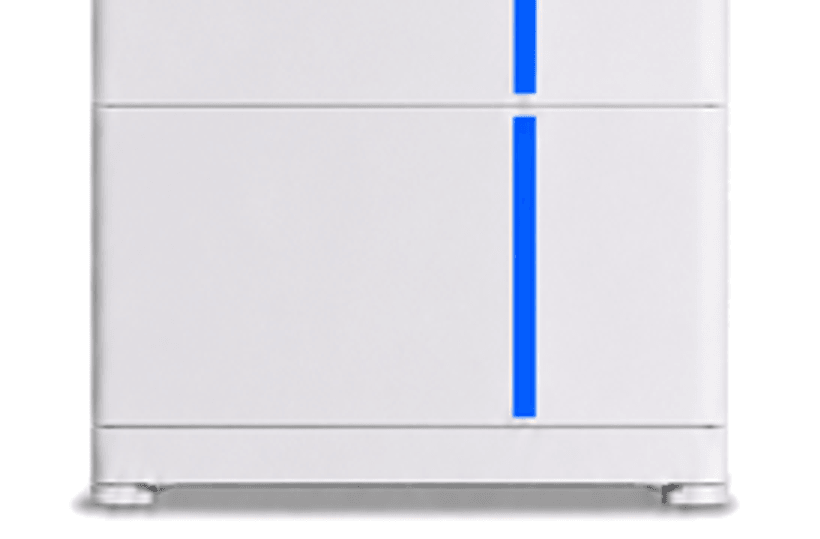
- For a second stack from six modules, or a stack beside a wall-mounted hybrid.
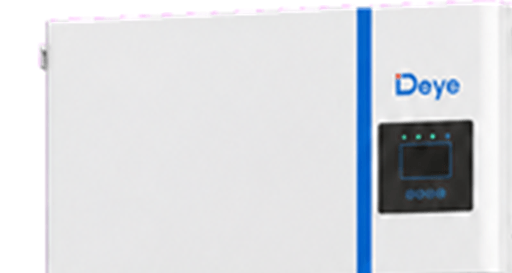
- 5 to 12 kW, sitting on top of the stack
Open a five-module system in the Designer
Your installer confirms the final parts, quantity and layout for your site.
AI-W5.1-B stacks installed in Australia
Stacks of AI-W5.1-B modules with wall-mounted Deye hybrids, from Deye Australia’s project cases.
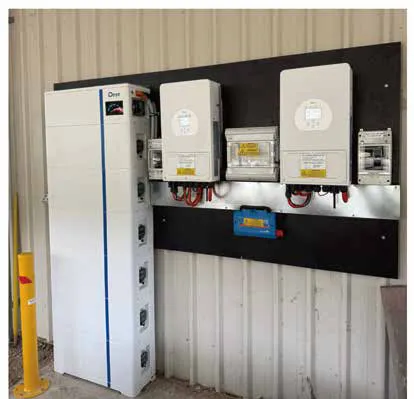
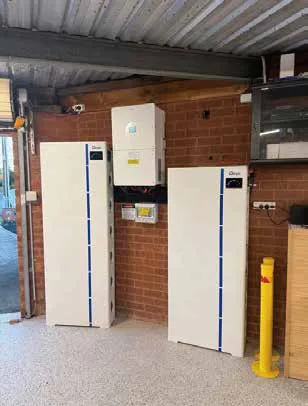
Photos: Deye Australia project cases, from Deye’s March 2026 Australian brochure.
What your electrician will do
- Choose the spotA level floor or a suitable wall, with room for the stack’s height and the clearances in Deye’s manual.
- Set the base and stack the modulesThe base goes down first and the modules stack on it, with no wiring between them. The PDU goes on top, as Deye’s PDU manual shows.
- Connect the inverterAn all-in-one sits on the PDU3 at the top of its stack. A wall-mounted hybrid connects to the PDU1 with Deye’s battery cable.
- Add a second stack if neededFrom six modules under an all-in-one, a PDU1 and base carry the second stack beside the first.
- Commission itSwitch on the PDU’s battery management system, then the inverter, and set the battery and work mode.
AI-W5.1-B specifications
Specifications below refer to the manufacturer document shown on this page. Check the document revision and exact model before specifying a system.
| Everest SKU | AI-W5.1-B |
|---|---|
| Product type | Stackable |
| Nominal storage capacity | 5.12 kWh |
| Battery system | Low voltage |
| Cell chemistry | LiFePO₄ (LFP) |
|---|---|
| Nominal module voltage | 51.2 V |
| Capacity | 100 Ah |
| Operating voltage | 43.2–57.6 V |
| Usable energy | 5.12 kWh at manufacturer test conditions |
| Charge / discharge current | 50 A recommended / 100 A maximum (one module) |
| Communication | CAN 2.0 / RS485 |
| Peak current, one module | 150 A for 10 s at 25 °C |
| Recommended depth of discharge | 100% |
| Built-in circuit breaker | 125 A 2P, 60 V DC |
| Mounting | Stacked; wall or floor installation |
|---|---|
| Enclosure protection | IP65 after stacking |
| Dimensions (W × H × D) | 720 × 300 × 255 mm; see document for mounting exclusions |
| Approximate module weight | 53 kg |
| Indicators | Module: working, alarm and protection LEDs. PDU: five state-of-charge LEDs (20–100%) and status LEDs |
| Cycle life | ≥ 6,000 cycles (25 ± 2 °C, 0.5C charge and discharge, 90% depth of discharge, to 70% of capacity) |
|---|---|
| Energy throughput | 16 MWh per module (to 70% of capacity) |
| Operating temperature, charging | 0 to 55 °C (−20 to 55 °C with heating on) |
| Operating temperature, discharging | −20 to 55 °C |
| Storage temperature | 0 to 35 °C |
| Humidity | 5–95% |
| Altitude | Up to 2,000 m |
| Cooling | Natural cooling |
| Modules in one stack | 1 to 6 (5.12 to 30.72 kWh) |
|---|---|
| Stacks in parallel | Up to 6: 36 modules, 184 kWh |
| Rated DC power, one stack | 2.5 kW for one module to 12 kW for five or six |
| PDU1 (W × H × D) | 720 × 238 × 255 mm, 15 kg; 250 A 2P, 1,000 V DC breaker |
| Base (W × H × D) | 720 × 68 × 255 mm, 6.5 kg |
| Cable to a wall-mounted hybrid | AI-W5.1-PCable1500, in the PDU1 kit |
Product selection and installation must be checked for your site.
AI-W5.1-B spec sheets and documents
Deye’s AI-W5.1-B datasheet, with the stack table and parts, and the installation manual for the battery, PDU and base. Read them here, or download a copy.
Open as PDF: Deye AI-W5.1-B Expandable Wall-Mounted Battery (5.12kWh) — datasheet · Deye AI-W5.1 battery and PDU installation manual
The document will load when you reach this section.
Pairs with
Build the full system- Deye Hybrid InvertersWall-mounted inverter, batteries alongside
- Deye AIO Hybrid InvertersInverter sits on top of the battery stack
Your installer confirms the final system and site requirements.
Questions about this battery?
Tell us about your inverter, or the one you have in mind, and how much storage you want. The model number travels with your enquiry.
How many modules can I stack?
Deye’s datasheet allows one to six modules in a stack (5.12 to 30.72 kWh) and up to six stacks in parallel: 36 modules, 184 kWh. With an all-in-one, our Designer builds 2 to 10 modules: five under the inverter, and from six a second stack on a PDU1 base.
What else does a stack need?
A PDU and a base. Under an all-in-one inverter that is the PDU3 and base; a second stack, or a stack beside a wall-mounted hybrid, uses the PDU1 and base, which Deye lists with its cable to a hybrid inverter. Each is a separate item in our store.
Can I use it with a wall-mounted Deye hybrid?
Deye’s datasheet stacks it on a PDU1 and base, cabled to a hybrid inverter, and Deye Australia’s project photos show it with the SUN-8K-SG05LP1-AU and SUN-10K-SG02LP1-AU. Send us your inverter model and we check the match, the cable and the quantity before you order.
Can I add it to the solar I already have?
Yes, with a Deye all-in-one. AC coupling connects your existing solar inverter to the all-in-one, so its surplus solar can charge the AI-W5.1-B stack. You keep your panels and inverter, and new panels can go on its own solar inputs. We check your existing inverter, switchboard and export limit first.
How much of each module can I use?
Deye lists 5.12 kWh usable per module at its test conditions (100% depth of discharge, 0.5C, 25 °C) and recommends 100% depth of discharge. Usable system energy depends on the settings. Our runtime estimates assume about 85% of the nominal kWh reaches your appliances.
How much power can it supply?
It grows with the stack: Deye rates one module at 2.5 kW, two at 5 kW, three at 7.5 kW, four at 10 kW, and five or six at 12 kW, with peaks up to 360 A for 10 seconds at 25 °C. The inverter’s own rating also limits what runs at once.
Can it go outside?
Deye rates the stacked battery IP65 with natural cooling. It discharges from −20 to 55 °C, and charges from 0 to 55 °C, or from −20 °C with its heating on. Your installer chooses the spot to suit Deye’s manual.
How long will it last?
Deye’s datasheet lists at least 6,000 cycles at 25 °C, charging and discharging at 0.5C to 90% depth of discharge, until it holds 70% of its capacity, and 16 MWh of energy through each module.
Can I add modules later?
Deye designed the stack to grow a module at a time, and the modules network themselves. Tell us what you have now before you add to it, and we check the PDU, base and quantity.
How big and heavy is a stack?
Each module is 720 × 300 × 255 mm and 53 kg. Deye lists a stack of four on a PDU1 and base at 1,412 mm tall and 233.5 kg, so plan the floor space and how it gets there.
Is this a complete battery system?
This listing is a battery module or enclosure. The matching inverter, controller or PDU, base or rack, cables and installation requirements depend on the battery family.
Can I mix it with a different battery family?
Do not assume different Deye battery families can be mixed. Send Everest the exact models and details of the existing system for a compatibility check.
Can I order this on its own?
Yes. Add it to your cart, continue to checkout and place your order. We confirm stock and email you a secure payment link, normally within one business day. Nothing is charged until you pay the link. Delivery is free on inverter or battery orders and quoted for parts-only orders. Any installation is arranged separately.
Can Everest help with compatibility?
Yes. Include the model numbers of your existing inverter, batteries and any other system parts in your enquiry. Matching a brand or power rating alone does not confirm compatibility.
More Deye batteries
View the range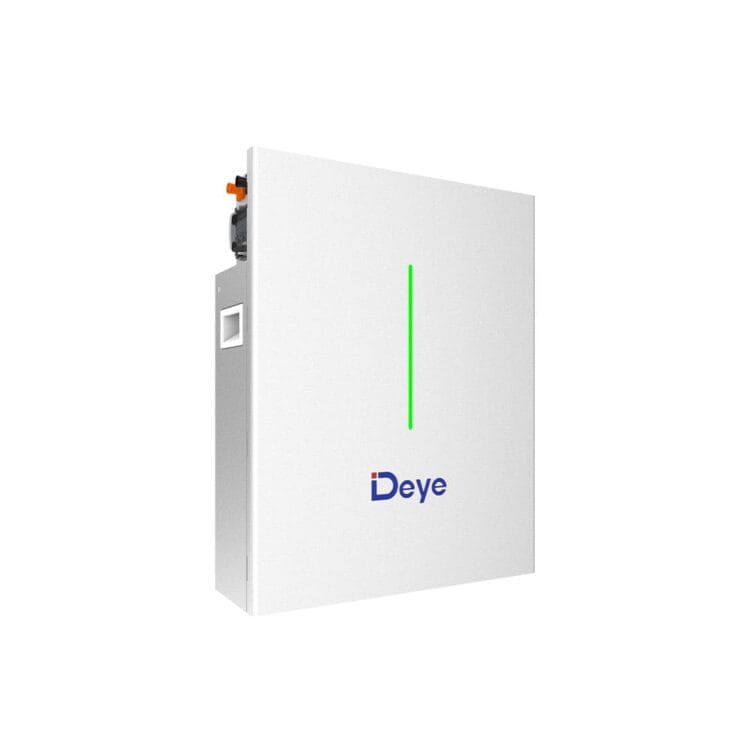 Floor / wall mountRW-F10.2
RW-F10.2
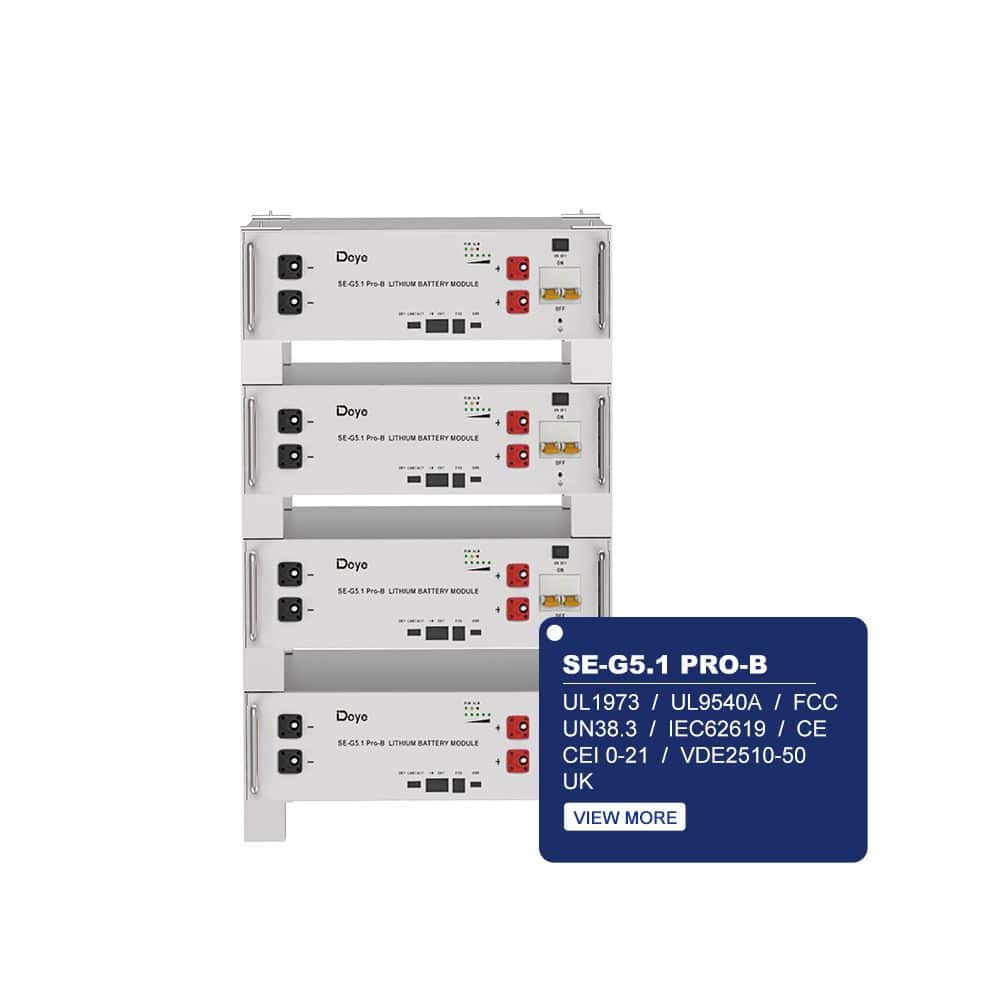 Rack mountSE-G5.1Pro-B
SE-G5.1Pro-B
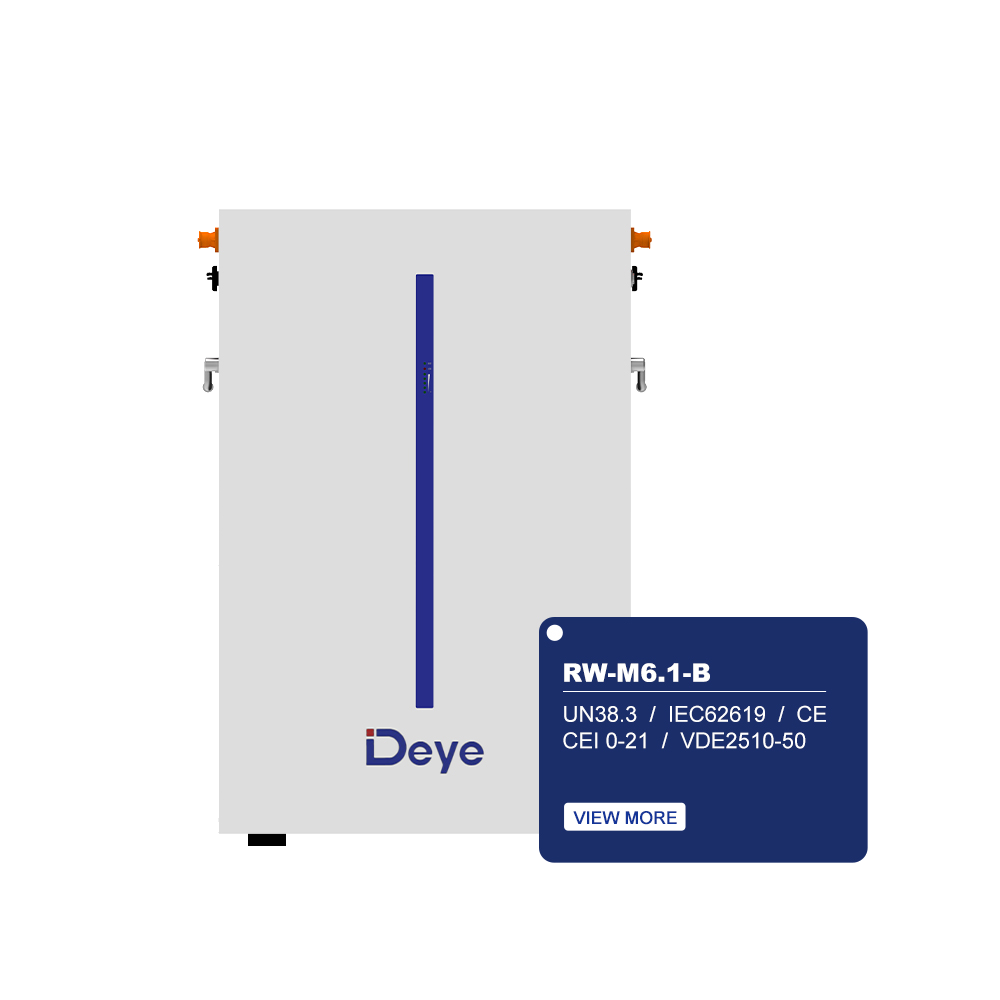 Wall mountRW-M6.1-B
RW-M6.1-B