


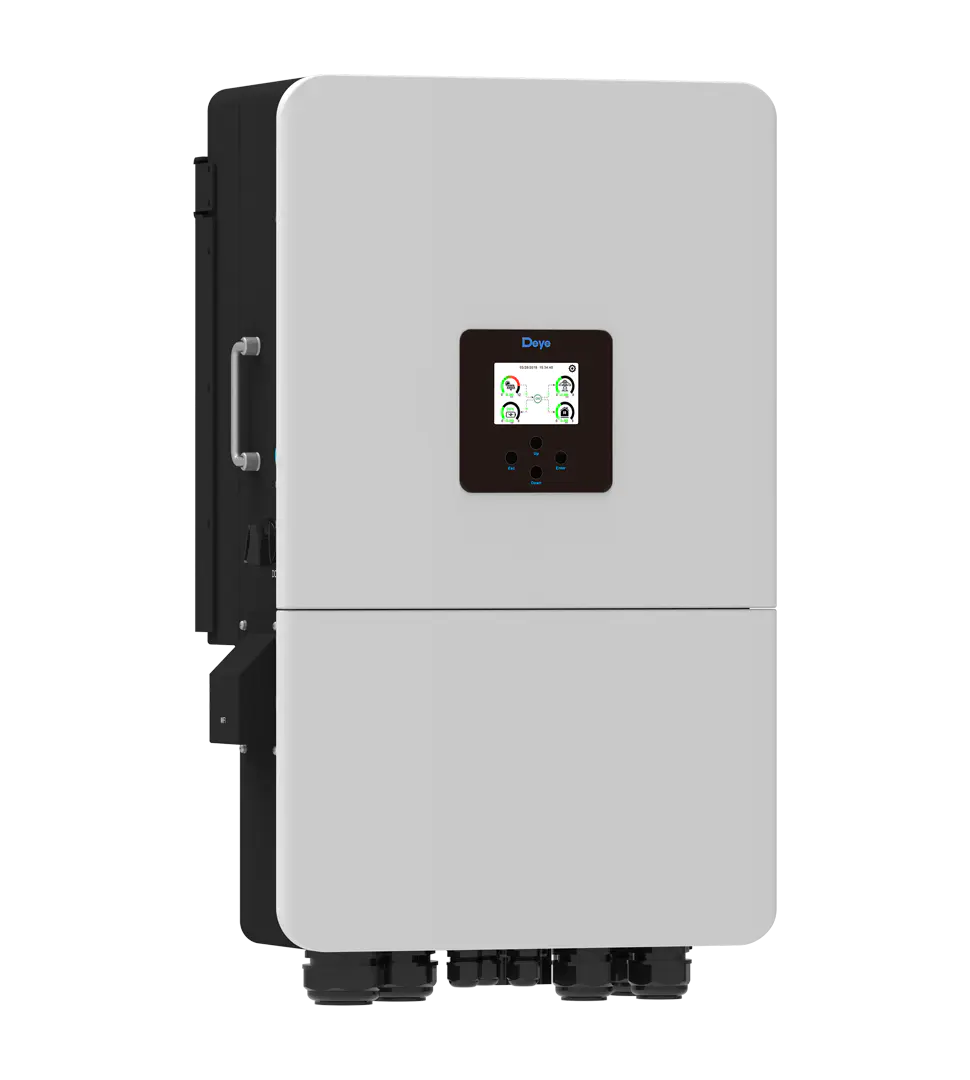
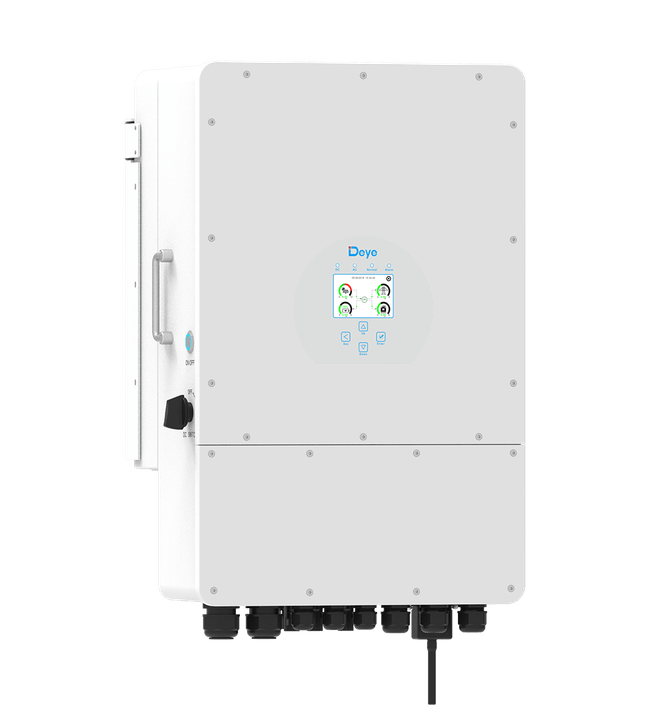
Deye product-family image, renders and Australian project photos. Check the model number for the exact item.
Deye Hybrid Inverters · Three phase
Deye 18kW Three Phase Hybrid Inverter
SUN-18K-SG05LP3-AU-SM2
Batteries and other system components sold separately.
- Owned and operated by Aussie electricians
- Advice from the electricians who install Deye
Request your order and we email a secure payment link, normally within one business day. Nothing is charged until you pay the link. Free delivery included. Installation is separate. Online Deye Price Beat Guarantee — seen it cheaper? Tell us before you order.
Want a licensed electrician with Deye experience to install this? Click to connect with a Deye installer
What will it run at once during a blackout?
In a blackout, your solar and battery are the only supply, so the inverter’s kW is the most your backup circuits can draw at once. The battery’s kWh is how long that lasts. Pick what you would run together to compare the sizes.
- 5 kWCovers it · 1.95 kW spareSmallest that covers it
- 6 kWCovers it · 2.95 kW spareSmallest that covers it
- 8 kWCovers it · 4.95 kW spareSmallest that covers it
- 10 kWCovers it · 6.95 kW spareSmallest that covers it
- 12 kWCovers it · 8.95 kW spareSmallest that covers it
- 15 kWCovers it · 11.95 kW spareSmallest that covers it
- 18 kWCovers it · 14.95 kW spareSmallest that covers itThis page
- 20 kWCovers it · 16.95 kW spareSmallest that covers it
This 18 kW model runs all of it with 14.95 kW to spare. The 5 kW model is the smallest that does.
A 10 kWh battery runs all of this for about 2 h 45 min on its own.
Fridge, air-con and pump motors draw extra for a moment as they start. Deye rates this model for twice its output for 10 seconds, which covers that. A kettle, oven or heater draws its full power for minutes, so it counts in full.
An estimate, not a guarantee. Appliance figures are typical running power. Only circuits wired to the inverter’s backup port run in a blackout; while the grid is on, it supplies anything above the inverter’s rating. The battery estimate assumes about 85% of its nominal kWh reaches your appliances. Each battery also has its own output limit, so we check the battery against what you want to run. On three phase, each phase can supply up to half the rating, so your electrician spreads backup circuits across the phases.
Three ways to set it up
A hybrid inverter runs your solar, battery, home and grid together. Here is how it fits, depending on what you have now. We’ll confirm the right one for your home.
New solar and battery
Solar, battery and grid in one
Your panels connect straight to the inverter’s own solar inputs. It runs your home from solar, stores the surplus in the battery and sends what is left to the grid.
- Solar powers your home first
- The battery covers your evenings
- Six time-of-use periods for cheaper power
You’ll need a Deye low-voltage battery. Your installer adds a CT or meter at the main switch so the inverter can see what your home uses.
Existing solar
Add a battery to the solar you have
AC coupling connects your existing solar inverter to the hybrid, so its surplus solar charges the battery. Keep your panels and your current inverter.
- Keep your panels and current inverter
- Surplus solar charges the battery
- New panels can go on the hybrid too
We check your existing inverter, switchboard and export limit before you order.
Blackouts and generators
Backup, off-grid and generator
If the grid goes down, the inverter keeps your backup circuits running from solar and battery. A generator can charge the battery when the sun can’t.
- Backup circuits stay on
- Battery charging from a generator
- Off-grid, and up to 10 in parallel
Your electrician moves the circuits you want kept on to the inverter’s backup port. It is not the whole house unless the system is designed that way.
How it runs your day
Six time-of-use periods
Set when the battery charges from the grid or a generator, and when it powers your home.
On-grid or off-grid
Runs with the grid, or on its own from solar, battery and generator.
AC coupling
Brings an existing solar inverter into the system.
Generator charging
Stores energy from a generator in the battery.
Deye’s datasheet for this range, in Documents, lists these. Your installer sets them up on the inverter.
Built around your energy needs
The SUN-18K-SG05LP3-AU-SM2 is Everest’s 18 kW three-phase hybrid inverter option for a low-voltage battery system. It brings solar generation and battery storage together, so a system can be designed around when your household needs electricity. Choose this model by its power rating, supply phase and battery voltage class. Battery capacity is a separate choice: a 5 kW inverter does not automatically mean a 5 kWh battery.
Battery
Built around a low-voltage battery
It charges and discharges a 40–60 V lithium battery at up to 330 A, following the battery’s own management system (BMS). Deye’s datasheet also lists lead-acid.
- 40–60 VBattery range
- 330 ACharge and discharge
- 6Time-of-use periods
Solar
Two solar inputs
Two MPPT trackers run separate strings of panels, so roofs facing different ways each work at their best. Deye lists up to 28,800 W of solar input for this model, and up to 36,000 W of panels connected. Panel strings must also suit its voltage and current limits.
- 2MPPT trackers
- 28.8 kWSolar input
- 160 VStart-up voltage
At home
Built to live on a wall
An IP65 enclosure with a noise rating of <60 dB. 51.9 kg and 456 × 750 × 268.5 mm, so it sits beside the battery indoors, or outdoors out of direct sun. Check and change settings on its screen, or in the Deye Cloud app through a Deye data logger.
- IP65Enclosure
- <60 dBNoise
- 51.9 kg456 × 750 × 268.5 mm
Protection built in
Surge protection
Type II on the solar (DC) and grid (AC) sides.
Anti-islanding
Disconnects from the grid when the grid goes down, as Australian grid rules require.
Residual current detection
Watches for current leaking to earth.
Insulation monitoring
Checks the solar wiring’s insulation to earth.
Overload and short circuit
Output over-current, over-voltage and short-circuit protection.
Reverse polarity
Protects against solar strings connected the wrong way round.
From the protection list in Deye’s datasheet for this range. Arc fault protection (AFCI) is listed as optional, so ask us whether your unit has it. The datasheet lists AS/NZS 4777.2, the Australian standard for grid-connected inverters.
15, 18 or 20 kW?
The sizes either side of this one, from Deye’s datasheets.
| Feature | 15 kWSUN-15K-SG05LP3-AU | 18 kWSUN-18K-SG05LP3-AU-SM2 · this page | 20 kWSUN-20K-SG05LP3-AU-SM2 |
|---|---|---|---|
| Price | Loading price… incl. GST | Loading price… incl. GST | Loading price… incl. GST |
| Rated output | 15 kW | 18 kW | 20 kW |
| Solar input | 24,000 W | 28,800 W | 32,000 W |
| Panels you can connect | 30,000 W | 36,000 W | 40,000 W |
| Solar trackers (MPPT) | 2 (2 + 2 strings) | 2 (2 + 2 strings) | 2 (2 + 2 strings) |
| Battery charge / discharge | 280 A | 330 A | 350 A |
| Grid-to-home passthrough | 70 A | 70 A | 70 A |
| Off-grid peak | 2 × rated power for 10 seconds | 2 × rated power for 10 seconds | 2 × rated power for 10 seconds |
| Size and weight | 456 × 750 × 268.5 mm, 51.9 kg | 456 × 750 × 268.5 mm, 51.9 kg | 456 × 750 × 268.5 mm, 51.9 kg |
| Datasheet | Lists it as SUN-15K-SG05LP3-AU-SM2 | Names this exact model | Names this exact model |
Batteries in our range
Deye low-voltage batteries we stock. Keep to one battery family in a bank, and we check the battery and quantity against your inverter before you pay.
- 5.12 kWh nominal
- Usable 5.12 kWh
- Stacked; wall or floor installation
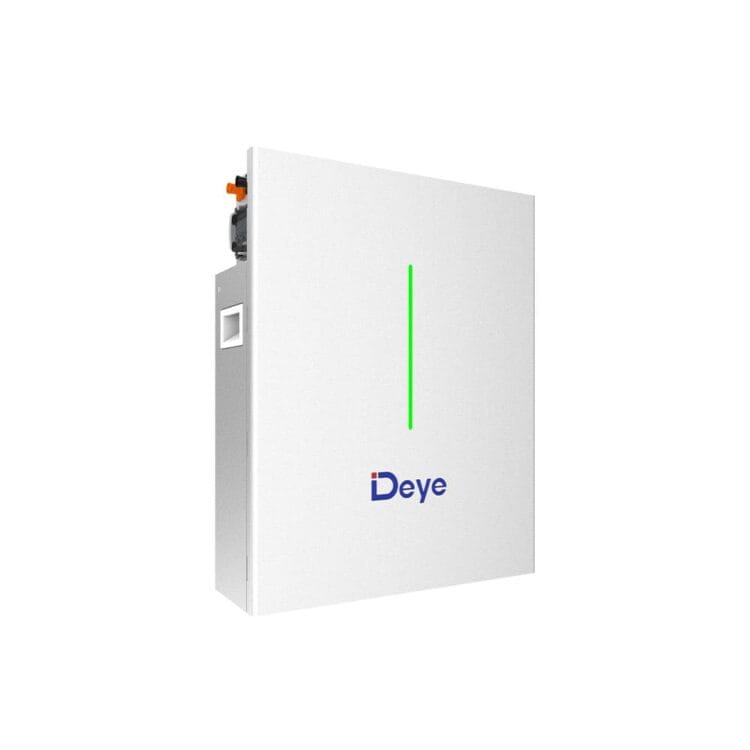
- 10.2 kWh nominal
- Usable 9.2 kWh
- Wall mounted or floor standing
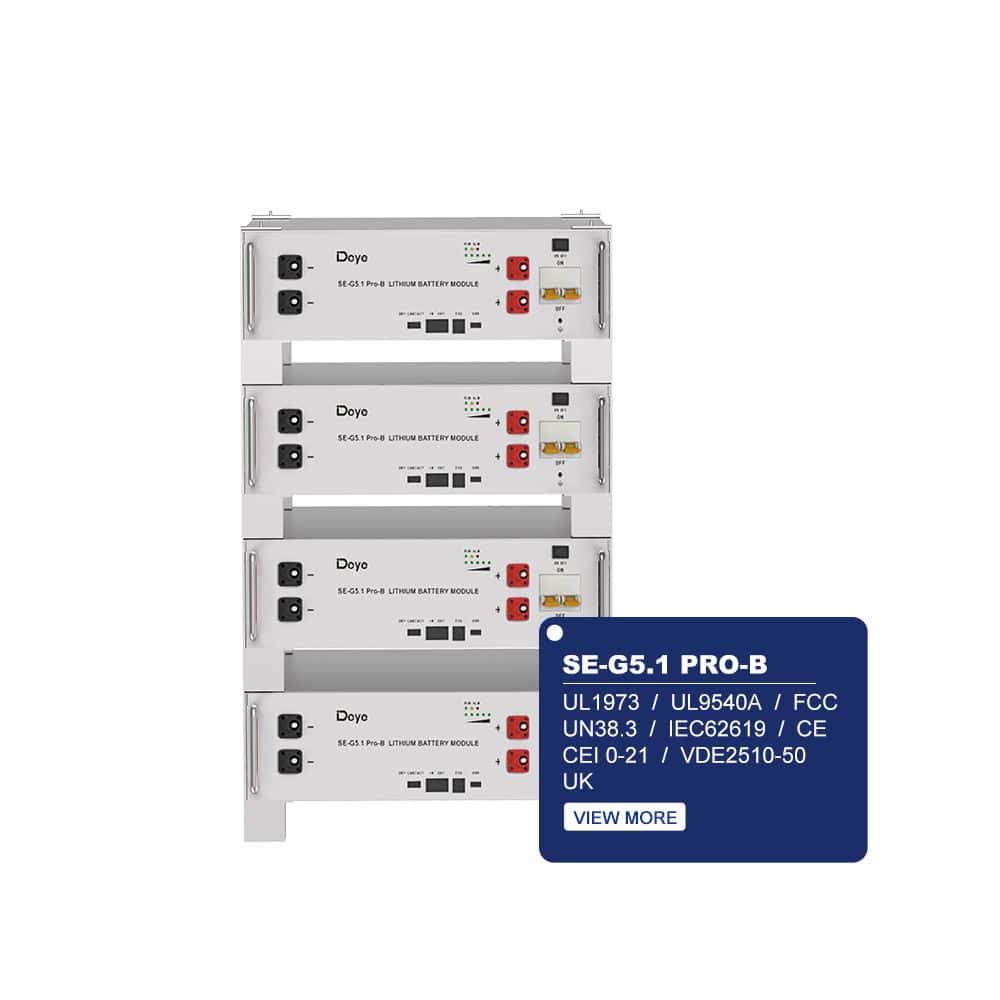
- 5.12 kWh nominal
- Usable 4.6 kWh
- 19-inch rack, wall or floor mounted
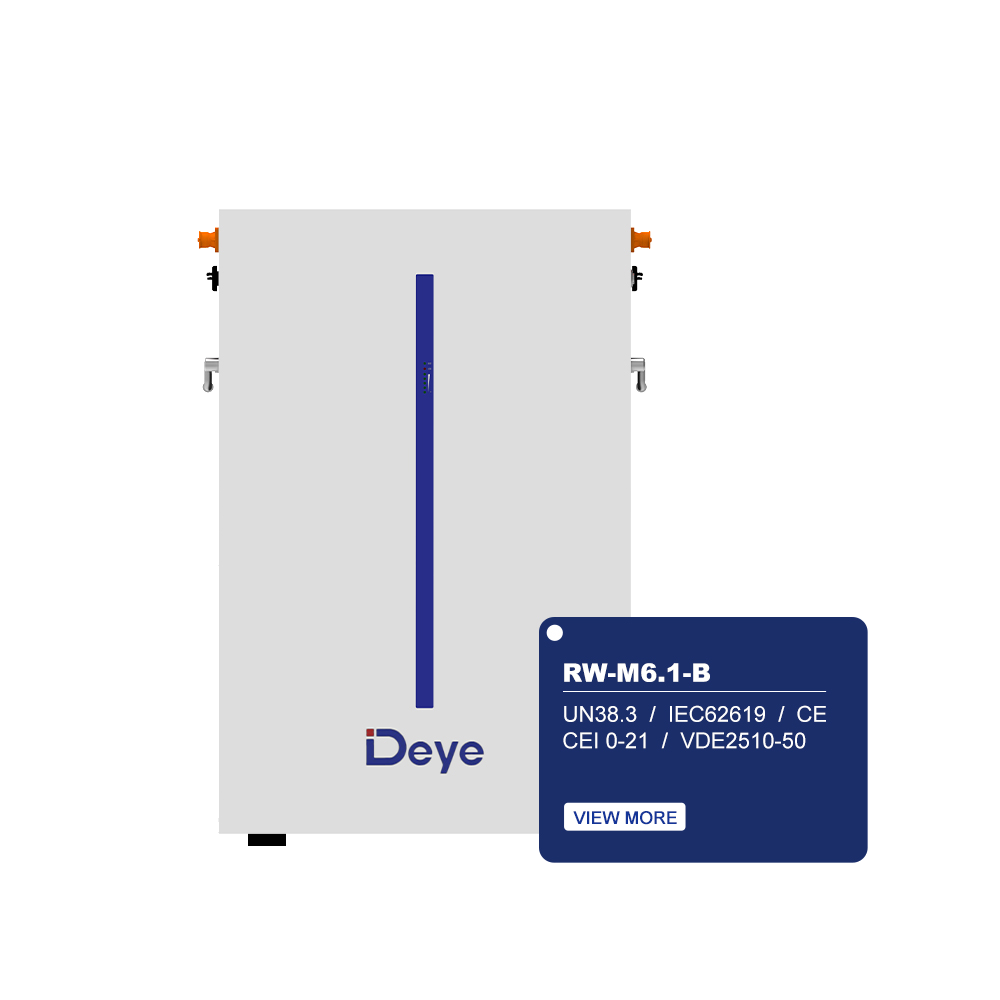
- 6.14 kWh nominal
- Usable 5.53 kWh
- Wall mounted or floor mounted
Your installer confirms the final battery, quantity and layout for your site.
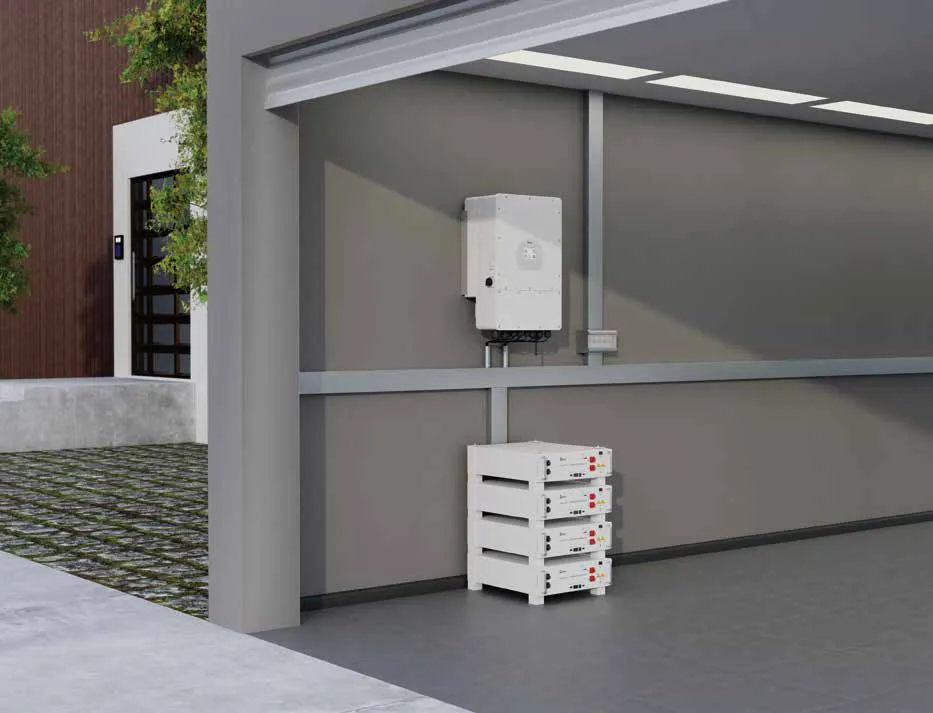
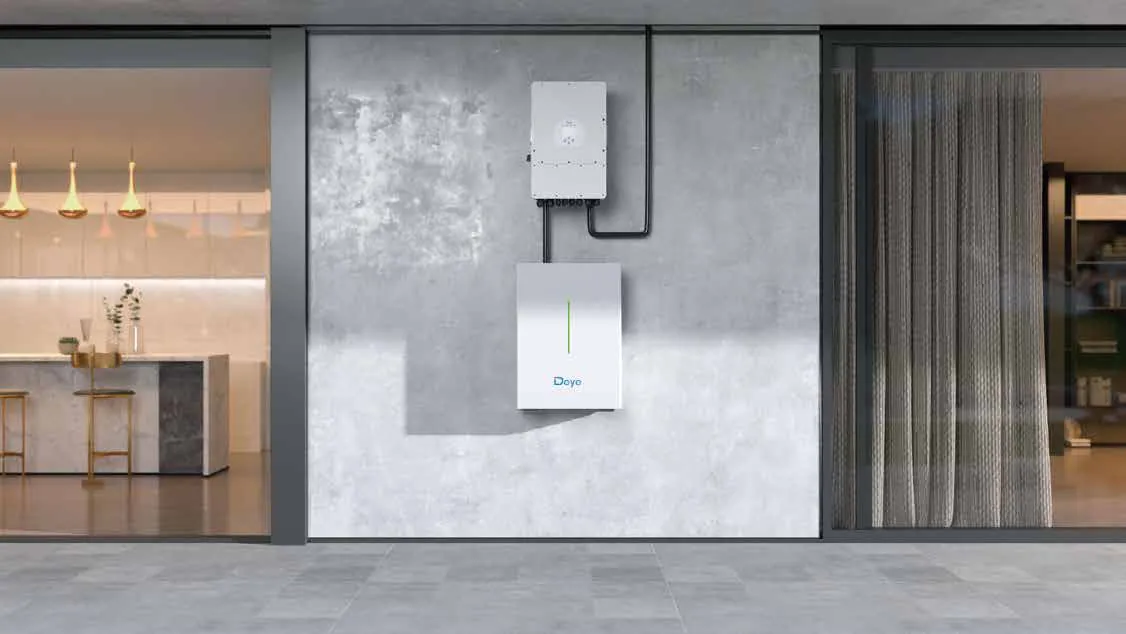
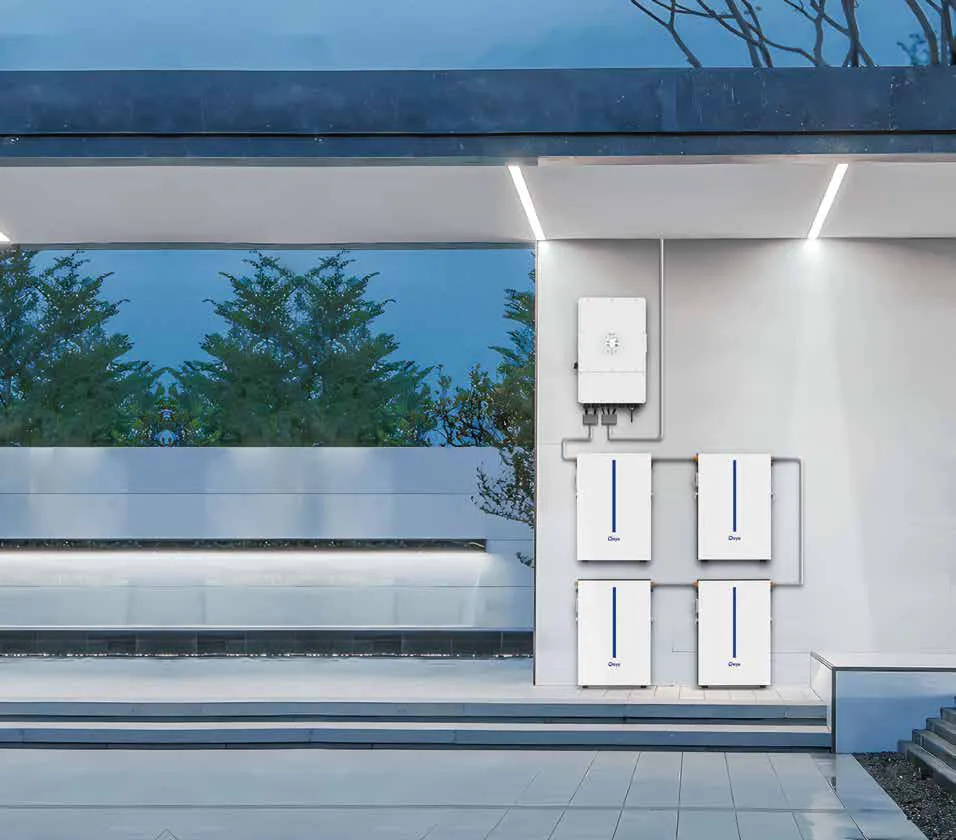
Deye hybrids installed in Australia
Deye hybrids and batteries in Australian homes and sheds, from Deye Australia’s project cases.
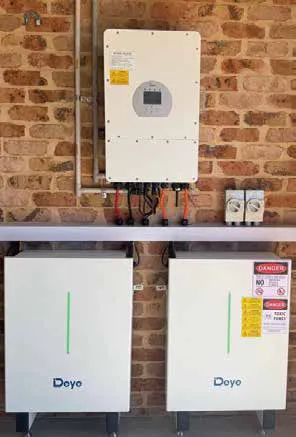
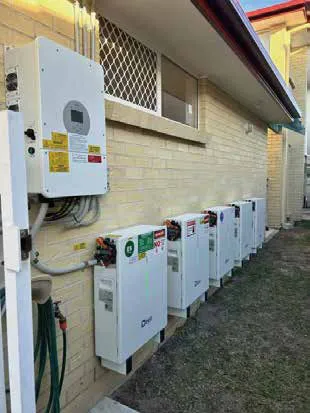
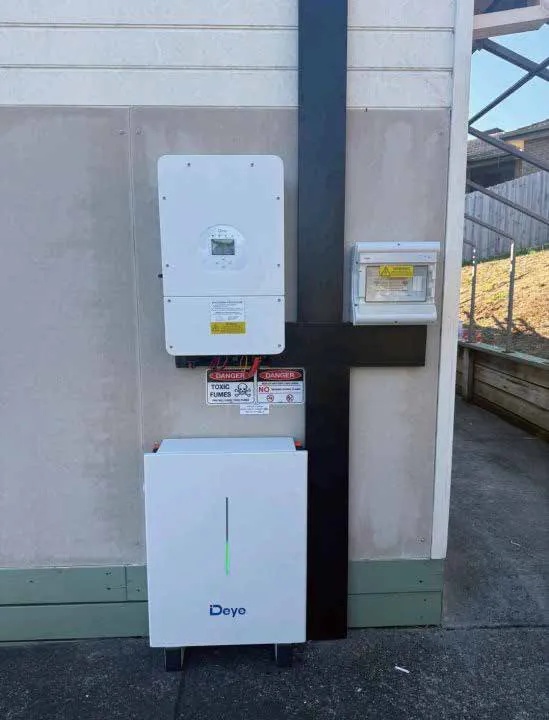
Photos: Deye Australia project cases, from Deye’s March 2026 Australian brochure.
What your electrician will do
- Check your supply and switchboardSingle or three phase, room for the breakers, and your network’s export and connection rules.
- Mount the inverterOn a solid wall, out of direct sun, with the clearances in Deye’s manual.
- Connect solar, battery and CTSolar strings to the MPPT inputs, the battery with its communication cable, and a CT or meter at the main switch.
- Wire the grid and backup circuitsThe grid to the grid port and the circuits you want kept on to the backup port, each with its own breaker.
- Commission itSet the grid settings your network requires, the battery type and the work mode, then pair a data logger for the app.
Technical specifications
Specifications below refer to the manufacturer document shown on this page. Check the document revision and exact model before specifying a system.
| Everest SKU | SUN-18K-SG05LP3-AU-SM2 |
|---|---|
| Product type | Wall mount |
| Power supply | Three phase |
| Catalogue power rating | 18 kW |
| Battery system | Low voltage |
| Maximum PV input power | 28800 W |
|---|---|
| Maximum PV access power | 36000 W |
| Maximum PV input voltage | 800 V |
| MPPT voltage range | 160–650 V |
| MPPTs / strings per MPPT | 2 / 2 + 2 |
| Maximum PV operating current | 36 + 36 A |
| Maximum PV short-circuit current | 54 + 54 A |
| Start-up voltage | 160 V |
| Battery voltage range | 40–60 V |
|---|---|
| Maximum charge / discharge current | 330 A |
| Rated AC active power | 18000 W |
|---|---|
| Rated AC current | 26.1 A |
| Continuous AC passthrough | 70 A |
| Off-grid peak power | 2 × rated power for 10 seconds |
| Maximum conversion efficiency | 97.6% |
| Enclosure rating | IP65 |
|---|---|
| Cabinet dimensions (W × H × D) | 456 × 750 × 268.5 mm; excludes connectors and brackets |
| Weight | 51.9 kg |
| Cooling | Intelligent air cooling |
| Noise | <60 dB |
| Connection suitability | Installer and network approval required |
Product selection and installation must be checked for your site.
Spec sheets & documents
Deye’s datasheet for this model. Read it here, or download a copy.
The document will load when you reach this section.
Questions about this inverter?
Tell us about your supply, your solar and the battery you have in mind. The model number travels with your enquiry.
What size inverter do I need?
Size it to what your home runs at once, and to your solar. 18 kW is the most it supplies at once from solar and battery; the check on this page compares the sizes. Solar is the other limit: Deye lists up to 28,800 W of solar input for this model and up to 36,000 W of panels connected. We confirm the size against your switchboard, your network’s rules and your battery.
What is the difference between kW and kWh?
18 kW is the inverter’s power: how much it supplies at once. A battery’s storage is measured in kWh: how long it lasts. For example, a 10 kWh battery runs a 2 kW load for about four hours.
Can I add a battery to the solar I already have?
Yes. AC coupling connects your existing solar inverter to this hybrid, so its surplus solar can charge the battery. You keep your panels and inverter, and new panels can go on its own solar inputs. We check your existing inverter, switchboard and export limit first.
Will it keep my power on in a blackout?
It keeps the circuits wired to its backup port running from solar and battery. Your electrician chooses those circuits, so it is not the whole house unless the system is designed that way. It supplies up to 18 kW at once, with a peak of twice its rating for 10 seconds while motors start. Each phase can supply up to half of that.
Can it charge the battery from the grid at cheaper times?
Yes. Six time-of-use periods let your installer set when the battery charges from the grid or a generator, and when it powers your home.
Which batteries work with it?
Deye low-voltage lithium batteries. We stock the AI-W5.1-B, RW-F10.2, SE-G5.1 Pro-B and RW-M6.1-B, and we check the battery and quantity against your inverter before you pay. Deye’s datasheet also lists lead-acid.
Do I need three-phase power for this?
Yes. It connects to a three-phase supply. Each phase can supply up to half the inverter’s rating, so your electrician spreads backup circuits across the phases.
Can I add another inverter later?
Yes. Deye lists up to 10 of these in parallel, on-grid or off-grid, for more power. A parallel system is set up as one, so plan it with us.
Can I connect a generator?
Yes. Deye lists generator charging for this range, so a generator can charge the battery through the inverter.
Can it be installed outside?
Yes. It is rated IP65. Your installer picks a spot out of direct sun, with room for airflow.
How do I check on it?
On its screen, or in the Deye Cloud app through a Deye data logger. Ask us which logger suits your inverter.
Is this the Australian model?
Yes. Deye’s datasheet lists SUN-18K-SG05LP3-AU-SM2 by this exact model number, with AS/NZS 4777.2, the Australian standard for grid-connected inverters.
Does this include batteries?
This page is for the inverter. Batteries, bases, cabling and installation are quoted separately unless Everest explicitly includes them in your system quotation.
Can I order this on its own?
Yes. Add it to your cart, continue to checkout and request your order. We confirm stock and email you a secure payment link, normally within one business day. Nothing is charged until you pay the link. Delivery is free on inverter or battery orders and quoted for parts-only orders. Any installation is arranged separately.
Can Everest help with compatibility?
Yes. Include the model numbers of your existing inverter, batteries and any other system parts in your enquiry. Matching a brand or power rating alone does not confirm compatibility.
More from this range
View the rangeWall mountDeye 20kW Three Phase Hybrid InverterSUN-20K-SG05LP3-AU-SM2
Wall mountDeye 15kW Three Phase Hybrid InverterSUN-15K-SG05LP3-AU
 Wall mountDeye 12kW Three Phase Hybrid Inverter
SUN-12K-SG04LP3-AU
Wall mountDeye 10kW Three Phase Hybrid InverterSUN-10K-SG04LP3-AU