


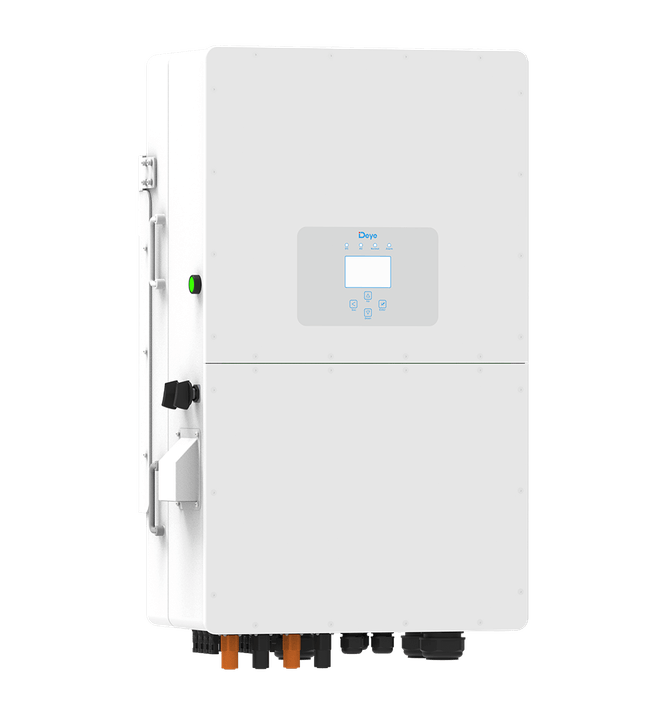
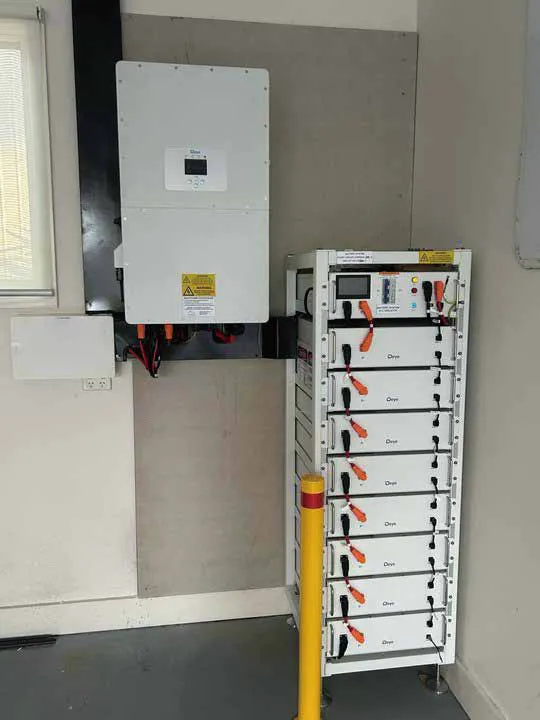
Deye product-family image and Australian project photos. Check the model number for the exact item.
Deye Hybrid Inverters · Three phase · High voltage · Commercial
Deye 29.9kW High Voltage Hybrid Inverter
SUN-29.9K-SG01HP3-AU-BM3 Three phase
The SUN-29.9K-SG01HP3-AU-BM3 is a 29.9 kW three-phase hybrid inverter for a high-voltage battery stack.
Larger home or small site? See the 5–25 kW rangeBatteries and other system components sold separately.
- Owned and operated by Aussie electricians
- Advice from the electricians who install Deye
Place your order and we email a secure payment link, normally within one business day. Nothing is charged until you pay the link. Free delivery included. Installation is separate. Online Deye Price Beat Guarantee — seen it cheaper? Tell us before you order.
Want a licensed electrician with Deye experience to install this? Click to connect with a Deye installer
Size it to your site
Size a business system by power first: the most you want it to supply at once. For backup, that is what must stay on in a blackout. For peak demand, it is how much of your peak the battery should cover. The inverter’s kW caps both, and Deye runs the same model in parallel for more. Then pick how long the battery should carry it.
- 29.9 kW2 in parallel · 59.8 kWSmallest that covers itThis page
- 40 kW2 in parallel · 80 kWSmallest that covers it
- 50 kWCovers it · 5 kW spareSmallest that covers it
- 60 kWCovers it · 15 kW spareSmallest that covers it
- 70 kWCovers it · 25 kW spareSmallest that covers it
- 80 kWCovers it · 35 kW spareSmallest that covers it
2 of this 29.9 kW model in parallel cover 45 kW (59.8 kW in all). The 50 kW model covers it on its own.
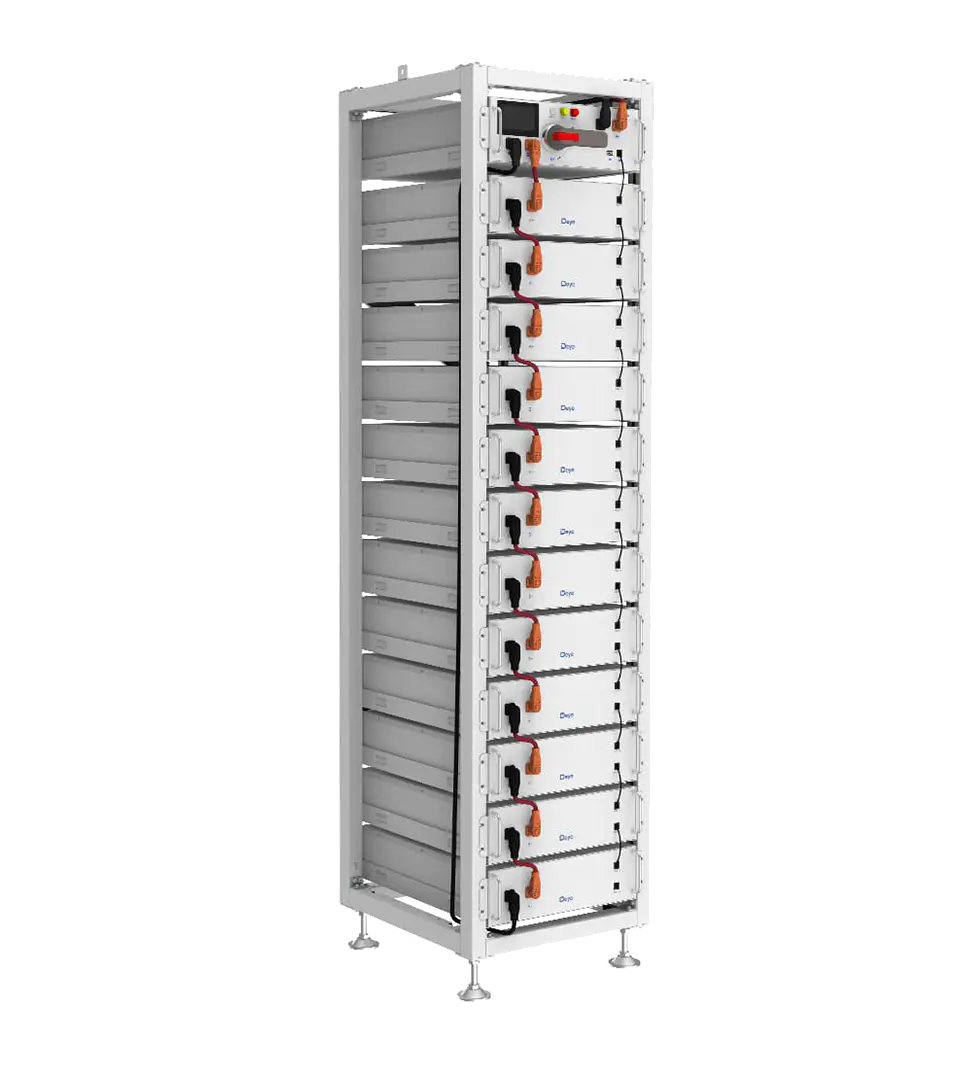
Deye’s BOS-G table sizes its 30 kW model, from the same family, for 2 hours at full output: 12 modules (61.44 kWh) in one stack of 12, with one control box and one 13-layer rack. Each inverter in a parallel system has its own battery set, so 2 inverters take 24 modules.
2 × Deye 29.9kW High Voltage Hybrid Inverter, 24 × BOS-GM5.1, 2 × HV Control Box, 2 × 13 Layer Rack
Motors, compressors and pumps draw extra for a moment as they start. Deye rates this model for 1.5 times its output for 10 seconds off-grid, which covers that.
An estimate, not a design. A bill may show peak demand in kVA rather than kW; we check yours against your interval data. Parallel units are the same model, each with its own battery set, as Deye’s manual requires. Battery module counts are Deye’s, from its BOS-G brochure. We confirm the system with your electrician and network.
Three ways to set it up
A hybrid inverter runs solar, battery, the grid and your backup board together. Here is how it fits a business site, depending on what you have now. We’ll confirm the right one for yours.
New solar and battery
Solar first, battery for the peaks
Your panels connect to the inverter’s own solar inputs. Solar runs the site first, the battery covers the evening and the peaks, and the grid supplies the rest.
- Solar runs the site first
- Grid peak shaving caps what you draw
- Zero export or a set export limit
You’ll need a Deye high-voltage battery stack. The three CTs in the box, or a smart meter, measure the whole site at the main switch.
Existing solar
Add a battery to the solar you have
AC coupling connects your existing solar inverters to the hybrid, so their surplus charges the battery. Keep your panels and your current inverters.
- Keep your panels and current inverters
- Surplus solar charges the battery
- New panels can go on the hybrid too
We check your existing inverters, switchboard and export limit before you order.
Blackouts and generators
Keep trading in a blackout
If the grid goes down, the backup board keeps running from solar and battery. A diesel generator can charge the battery, and the inverter starts it when the battery falls to a level you set.
- Backup board stays on
- Starts the generator at the battery level you set
- Generator peak shaving protects the generator
Your electrician puts the circuits you want kept on onto the backup board. It is not the whole site unless the system is designed that way.
How it runs your site
Time of use
Six windows a day to charge from the grid or a generator, or to run the site from the battery.
Export control
Zero export, or a set export limit, measured by the CTs or a meter at your main switch.
Grid peak shaving
Caps what the site draws from the grid. If solar and the battery can’t cover the rest, the draw goes above the cap.
Uneven loads
With uneven loads on the backup board, asymmetric phase feeding draws evenly from the three grid phases.
Your installer sets these on the inverter. Deye’s user manual in Documents describes each setting.
Built for business
The SUN-29.9K-SG01HP3-AU-BM3 is a 29.9 kW three-phase hybrid inverter for a high-voltage battery stack. It runs solar, BOS-G batteries, the grid, a backup board and a generator together, for businesses, farms and larger sites. Choose it by the power your site draws at once. Storage is a separate choice: Deye sizes BOS-G stacks by hours at full output.
Battery
Built for a high-voltage battery stack
It runs Deye BOS-G stacks at 160–800 V through two battery inputs, at up to 50 A + 50 A. The modules connect in series, so the same power flows at a much lower current than a 48 V battery.
- 160–800 VBattery range
- 2Battery inputs
- 50 + 50 ACharge and discharge
Solar
Three solar inputs
Three MPPT trackers, two strings each, so roofs facing different ways each work at their best. Deye lists up to 44,850 W of solar input for this model, and up to 50,000 W of panels connected.
- 3MPPT trackers
- 44.85 kWSolar input
- 50 kWPanels connected
Power
Made for big loads
While the grid is on, up to 200 A passes through to your backup board, and the generator input takes 200 A. Off-grid it delivers 1.5 times its rating for 10 seconds, for motors and compressors starting. Deye lists up to 10 in parallel for more.
- 200 AGrid to backup board
- 1.5× for 10 sOff-grid peak
- Up to 10In parallel
Protection built in
Surge protection
Type II on the solar (DC) and grid (AC) sides.
Anti-islanding
Disconnects from the grid when the grid goes down, as Australian grid rules require.
Residual current detection
Watches for current leaking to earth.
Insulation monitoring
Checks the solar wiring’s insulation to earth.
Overload and short circuit
Output over-current, over-voltage and short-circuit protection.
Reverse polarity
Protects against solar strings connected the wrong way round.
From the protection list in Deye’s datasheet for this range. Arc fault protection (AFCI) is listed as optional, so ask us whether your unit has it. The datasheet lists AS/NZS 4777.2, the Australian standard for grid-connected inverters.
How much battery: Deye’s BOS-G sizing
Deye sizes BOS-G batteries by hours at the inverter’s full output. Each module stores 5.12 kWh. Modules connect in series into a stack with its own control box; a 13-layer rack holds 12 modules and the box, and a 9-layer rack holds 8.
| Inverter | 1 hour | 2 hours | 3 hours | 4 hours |
|---|---|---|---|---|
| 30 kWSUN-30K-SG01HP3-AU-BM3 | 6 modules30.72 kWh · 1 stack | 12 modules61.44 kWh · 1 stack | 18 modules92.16 kWh · 2 stacks of 9 | 24 modules122.88 kWh · 2 stacks of 12 |
| 50 kWSUN-50K-SG01HP3-AU-BM4 | 10 modules51.2 kWh · 1 stack | 20 modules102.4 kWh · 2 stacks of 10 | 30 modules153.6 kWh · 3 stacks of 10 | 40 modules204.8 kWh · 4 stacks of 10 |
This 29.9 kW model is not in the table; the 30 kW row is Deye’s nearest model, from the same family.
- 5.12 kWh nominal
- 19-inch BOS-G rack
- IP20
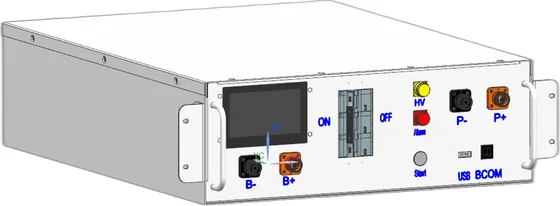
- IP20
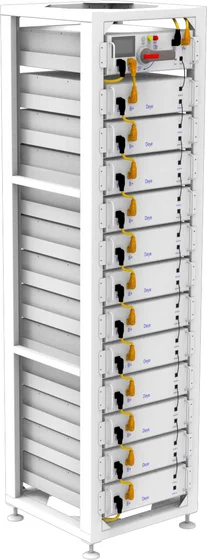
From the “Product Expansion” table in Deye’s BOS-G brochure for Australia (19 November 2025), in Documents. Deye allows up to 16 battery racks in parallel, and in a parallel system each inverter has its own battery set. With these inverters a stack takes at least four modules. Your installer confirms the final layout for your site.
Network approval and export
A business system connects under your network’s rules. Here is what they cover, and what we need from you to quote it.
Over 30 kVA is a bigger application
Energy Networks Australia’s guidelines treat three-phase systems up to 30 kVA as basic micro embedded generation. Larger systems go through your network’s assessment for bigger connections. This 29.9 kW model is rated at 29,900 VA.
Export limits
Your network sets how much you may export, and it can be zero. The inverter holds the limit with the three CTs in the box or a smart meter at your main switch.
AS/NZS 4777.2
Deye’s datasheet lists AS/NZS 4777.2, the Australian standard for grid-connected inverters. Your installer applies the settings your network requires.
Bigger sites, bigger CTs
The CTs in the box read up to 300 A. Deye’s manual calls for a smart meter or larger CTs above 300 A in a parallel system, or a smart meter when the switchboard is more than 10 m away.
Parallel systems
Every inverter is the same model with its own battery set, and one is set as the master. Deye’s manual also asks for the Zero Export To CT work mode.
What we need from you
- 12 months of bills, or your meter’s interval data
- Your supply: the main switch size, in amps per phase
- Photos of your switchboard and where the system would go
- Anything already on site: solar, a generator or batteries
- What must stay on in a blackout
The 30 kVA line is from Energy Networks Australia, ENA DOC 039-2019 ; the CT and parallel rules from Deye’s manual, in Documents. Your network’s own rules apply.
29.9, 40 or 50 kW?
The sizes either side of this one, from Deye’s datasheets.
| Feature | 29.9 kWSUN-29.9K-SG01HP3-AU-BM3 · this page | 40 kWSUN-40K-SG01HP3-AU-BM4 | 50 kWSUN-50K-SG01HP3-AU-BM4 |
|---|---|---|---|
| Price | $7,456.00 incl. GST | incl. GST | incl. GST |
| Rated output | 29.9 kW | 40 kW | 50 kW |
| Solar input | 44,850 W | 60,000 W | 75,000 W |
| Panels you can connect | 50,000 W | 80,000 W | 100,000 W |
| Solar trackers (MPPT) | 3 (2 + 2 + 2 strings) | 4 (2 + 2 + 2 + 2 strings) | 4 (2 + 2 + 2 + 2 strings) |
| Battery voltage | 160–800 V | 160–800 V | 160–800 V |
| Battery charge / discharge | 50 + 50 A | 50 + 50 A | 50 + 50 A |
| Grid to backup board | 200 A | 200 A | 200 A |
| Off-grid peak | 1.5 × rated power for 10 seconds | 1.5 × rated power for 10 seconds | 1.5 × rated power for 10 seconds |
| Size and weight | 527 × 894 × 294 mm, 80 kg | 527 × 894 × 294 mm, 80 kg | 527 × 894 × 294 mm, 80 kg |
| Datasheet | Names this exact model | Names this exact model | Names this exact model |
Deye hybrids installed in Australia
Larger Deye high-voltage hybrids with BOS-G batteries, from Deye Australia’s project cases.
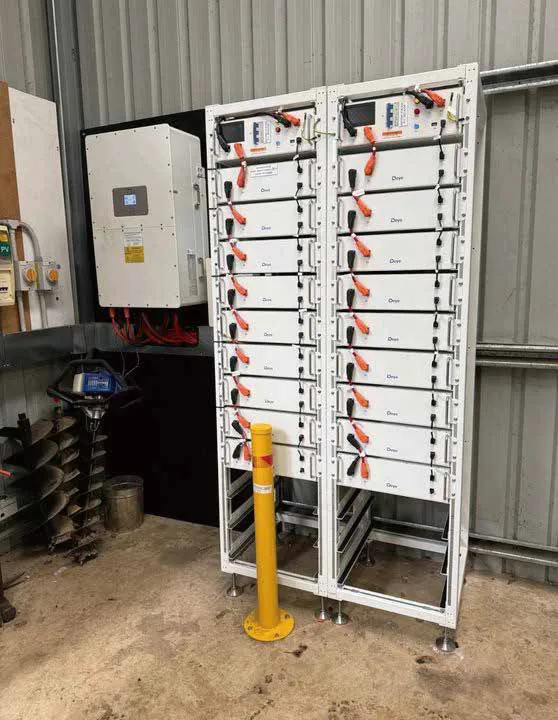
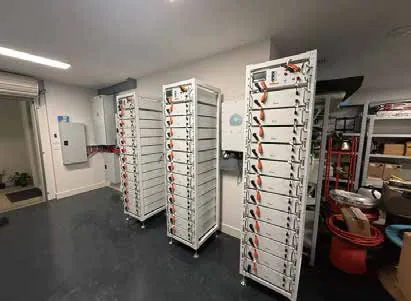
Photos: Deye Australia project cases, from Deye’s March 2026 Australian brochure.
What your electrician will do
- Read your siteBills or interval data, your supply and main switch, and where the inverter and battery racks go.
- Apply to your networkYour electrician lodges the connection application, then sets the export limit and protection settings the network approves.
- Mount the inverter and racksThe inverter on a solid wall (80 kg), out of direct sun; the battery racks on a level floor indoors.
- Connect solar, batteries, grid and backupSolar strings to the MPPT inputs, each battery stack with its communication cable, CTs or a meter at the main switch, and the backup board on the load port.
- Commission itGrid settings for your network, the battery, the work mode and any parallel set-up, then a data logger for Deye Cloud.
SUN-29.9K-SG01HP3-AU-BM3 specifications
Specifications below refer to the manufacturer document shown on this page. Check the document revision and exact model before specifying a system.
| Everest SKU | SUN-29.9K-SG01HP3-AU-BM3 |
|---|---|
| Product type | Wall mount |
| Power supply | Three phase |
| Catalogue power rating | 29.9 kW |
| Battery system | High voltage |
| Maximum PV input power | 44850 W |
|---|---|
| Maximum PV access power | 50000 W |
| Maximum PV input voltage | 1000 V |
| MPPT voltage range | 150–850 V |
| MPPTs / strings per MPPT | 3 / 2 + 2 + 2 |
| Maximum PV operating current | 36 + 36 + 36 A |
| Maximum PV short-circuit current | 55 + 55 + 55 A |
| Start-up voltage | 180 V |
| Battery voltage range | 160–800 V |
|---|---|
| Maximum charge / discharge current | 50 + 50 A |
| Rated AC active power | 29900 W |
|---|---|
| Rated AC current | 43.4 A |
| Continuous AC passthrough | 200 A |
| Off-grid peak power | 1.5 × rated power for 10 seconds |
| Maximum conversion efficiency | 97.6% |
| Enclosure rating | IP65 |
|---|---|
| Cabinet dimensions (W × H × D) | 527 × 894 × 294 mm; excludes connectors and brackets |
| Weight | 80 kg |
| Cooling | Intelligent air cooling |
| Noise | ≤65 dB |
| Connection suitability | Installer and network approval required |
| Battery inputs | 2 |
|---|---|
| Generator input, rated current | 200 A |
| Rated PV input voltage | 600 V |
| Grid connection | 3L + N + PE, 230/400 V or 240/415 V |
| Grid frequency / range | 50 Hz / 45–55 Hz |
| Power factor adjustment | 0.8 leading to 0.8 lagging |
| Current distortion (THDi) | <3% of nominal power |
| Euro efficiency | 97.0% |
| MPPT efficiency | >99% |
| Operating temperature | −40 to +60 °C; derating above 45 °C |
| Permissible altitude | 2000 m |
| Communication interfaces | Wi-Fi, RS485, CAN |
| Display | LCD |
| Surge protection | Type II on DC and AC |
| AFCI | Optional; confirm inclusion |
| Inverter topology | Non-isolated |
| Overvoltage category | OVC II (DC), OVC III (AC) |
Product selection and installation must be checked for your site.
SUN-29.9K-SG01HP3-AU-BM3 spec sheets and documents
Deye Australia’s datasheet and user manual, which name this exact model, and its BOS-G brochure with the battery sizing table. Read them here, or download a copy.
Open as PDF: Deye 29.9–50kW Three-Phase Hybrid Inverter — Australian datasheet · Deye 29.9–50kW Three-Phase Hybrid Inverter — user manual · Deye BOS-G High-Voltage Battery — Australian brochure
The document will load when you reach this section.
Questions about this inverter?
Tell us about your site, your supply and the battery you have in mind. The model number travels with your enquiry.
Which size do I need?
Size it to the power your site draws at once: your peak demand, or what must stay on in a blackout. 29.9 kW is the most this model supplies at once; the check on this page compares the sizes and parallel units. Solar is the other limit: Deye lists up to 44,850 W of solar input for this model, and up to 50,000 W of panels connected. We check the size against your interval data, switchboard and network.
Can I run more than one?
Yes. Deye lists up to 10 in parallel, on-grid or off-grid. Its manual asks for the same model throughout, each with its own battery set, with one inverter set as the master.
How much battery do I need?
Deye sizes BOS-G batteries by hours at full output. Its table gives its 30 kW model, from the same family, 6 modules (30.72 kWh) for each hour, up to 4 hours. The battery section on this page shows the whole table.
Which batteries work with it?
Deye high-voltage lithium batteries, built as stacks: BOS-G modules in series, each stack with its own control box and rack. The stack’s voltage must sit inside this inverter’s 160–800 V battery range, so we design it with you.
Can it cut my peak demand?
It can cap what the site draws from the grid. With grid peak shaving set, solar and the battery supply the load above your cap. Deye’s manual is clear that if they can’t cover it, the draw goes above the cap, so the battery has to be sized for your peaks. Whether that lowers your bill depends on your tariff.
Can it charge the battery from the grid at cheaper times?
Yes. Six time-of-use periods let your installer set when the battery charges from the grid or a generator, and when it runs the site.
Can I limit what I send to the grid?
Yes. Zero export, or a set maximum, measured by the three CTs in the box or a smart meter at your main switch. Your installer sets the limit your network approves.
Will it keep my business running in a blackout?
It keeps the circuits on its backup port running from solar and battery. Your electrician chooses those circuits, so it is not the whole site unless the system is designed that way. It supplies up to 29.9 kW at once, with 1.5 times that for 10 seconds while motors and compressors start.
Can it run with a generator?
Yes. A diesel generator can charge the battery, and the inverter can start it through a dry contact when the battery falls to a level you set. Generator peak shaving holds the generator to its rating, and the inverter supplies the rest.
Do I need network approval?
Yes. Your electrician applies to your network before the system connects, and the network sets your export limit. Energy Networks Australia’s guidelines treat three-phase systems up to 30 kVA as basic micro embedded generation; above that, networks assess a larger connection. Deye’s datasheet lists AS/NZS 4777.2, the Australian standard for grid-connected inverters.
What does high voltage mean here?
The battery modules connect in series, so the stack runs at 160–800 V instead of the 40–60 V of a low-voltage battery. It needs a Deye high-voltage battery stack; low-voltage batteries do not connect to it.
Do I need three-phase power for this?
Yes. It connects to a three-phase supply, 230/400 V or 240/415 V. Deye’s manual adds asymmetric phase feeding: with uneven loads on the backup board, it draws evenly from the three grid phases.
Can it be installed outside?
The inverter is rated IP65. Your installer picks a spot out of direct sun, with the clearances in Deye’s manual. BOS-G batteries are rated IP20, so the racks go indoors.
How do I check on it?
On its screen, or in the Deye Cloud app through a Deye data logger, which Deye lists as optional. Ask us which logger suits your system.
Is this the Australian model?
Yes. Deye’s datasheet lists SUN-29.9K-SG01HP3-AU-BM3 by this exact model number, with AS/NZS 4777.2, the Australian standard for grid-connected inverters.
Does this include batteries?
This page is for the inverter. Batteries, bases, cabling and installation are quoted separately unless Everest explicitly includes them in your system quotation.
Can I order this on its own?
Yes. Add it to your cart, continue to checkout and place your order. We confirm stock and email you a secure payment link, normally within one business day. Nothing is charged until you pay the link. Delivery is free on inverter or battery orders and quoted for parts-only orders. Any installation is arranged separately.
Can Everest help with compatibility?
Yes. Include the model numbers of your existing inverter, batteries and any other system parts in your enquiry. Matching a brand or power rating alone does not confirm compatibility.
More Deye Hybrid Inverters
View the range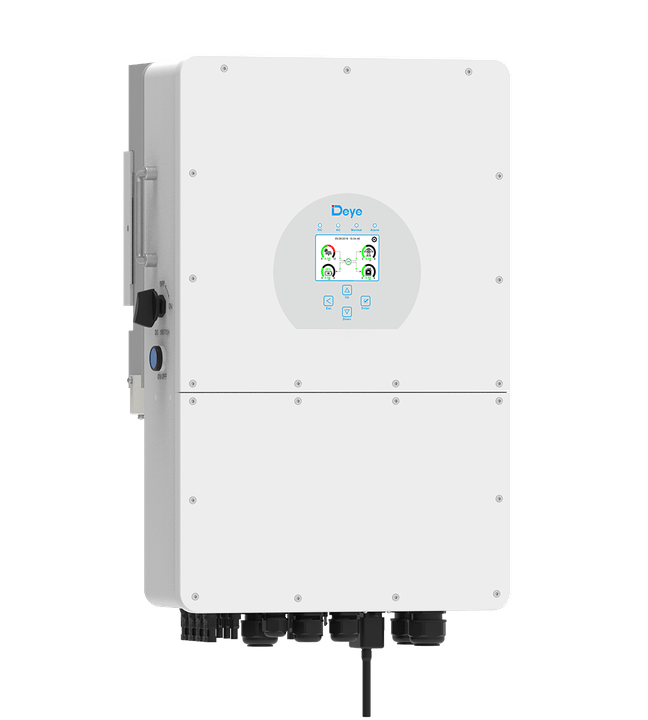 Wall mountDeye 25kW High Voltage Hybrid Inverter
SUN-25K-SG01HP3-AU-AM2
Wall mountDeye 20kW High Voltage Hybrid InverterSUN-20K-SG01HP3-AU-AM2
Wall mountDeye 40kW High Voltage Hybrid InverterSUN-40K-SG01HP3-AU-BM4
Wall mountDeye 15kW High Voltage Hybrid InverterSUN-15K-SG01HP3-AU-AM2