


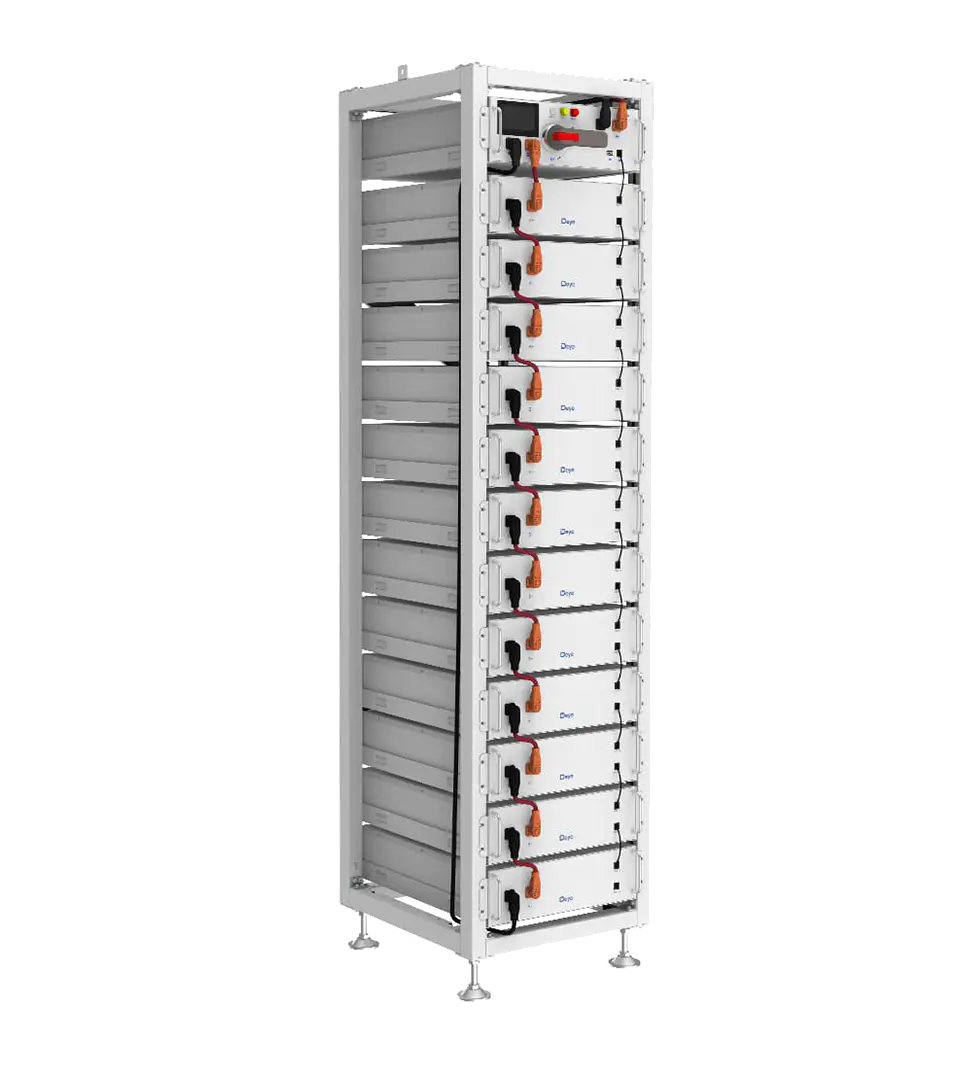
Deye product images and render, and Deye Australia project photos. Check the model number for the exact item.
- 5 kWSUN-5K-SG01HP3-AU-AM2
- 6 kWSUN-6K-SG01HP3-AU-AM2
- 8 kWSUN-8K-SG01HP3-AU-AM2
- 10 kWSUN-10K-SG01HP3-AU-AM2
- 12 kWSUN-12K-SG01HP3-AU-AM2
- 15 kWSUN-15K-SG01HP3-AU-AM2
- 20 kWSUN-20K-SG01HP3-AU-AM2
- 25 kWSUN-25K-SG01HP3-AU-AM2
- 29.9 kWSUN-29.9K-SG01HP3-AU-BM3
- 40 kWSUN-40K-SG01HP3-AU-BM4
- 50 kWSUN-50K-SG01HP3-AU-BM4
- 60 kWSUN-60K-SG02HP3-AU-EM6
- 70 kWSUN-70K-SG02HP3-AU-EM6
- 80 kWSUN-80K-SG02HP3-AU-EM6
Your installer confirms the final system and site requirements.
Deye Batteries · BOS-G high voltage
Deye BOS-GM5.1 5.12 kWh Battery
BOS-GM5.1
One 5.12 kWh module of Deye’s high-voltage BOS-G battery. Four to twelve connect in series in a rack with a control box, for a Deye high-voltage hybrid at home or at work.
Inverter, cables and any required PDU/base sold separately.
Not sure how many you need? Get it designed
- Owned and operated by Aussie electricians
- Advice from the electricians who install Deye
Place your order and we email a secure payment link, normally within one business day. Nothing is charged until you pay the link. Free delivery included. Installation is separate. Online Deye Price Beat Guarantee — seen it cheaper? Tell us before you order.
Want a licensed electrician with Deye experience to install this? Click to connect with a Deye installer
How many modules do you need?
Each module adds 5.12 kWh, and the modules connect in series, so a stack’s voltage and power grow with it. Pick what you would run at once, then set the stack: we show how long it lasts, what Deye rates it for, and which rack it needs.
8 modules (40.96 kWh) run all of this for about 11 h 25 min.
Deye rates eight modules in series for 40.96 kW, which covers 3.05 kW.
Each stack also needs a control box and a rack: see Build the stack.
An estimate, not a guarantee. Appliance figures are typical running power. The runtime assumes about 85% of the battery’s nominal kWh reaches your appliances, and the inverter’s own rating also limits what runs at once. Stack ratings are from Deye’s BOS-G brochure for Australia. Sizing a business? Our 29.9–50 kW hybrid pages size BOS-G stacks by kW and hours, from Deye’s own table.
Three ways to use it
A BOS-G stack runs with a Deye high-voltage hybrid inverter: three-phase models from 10 kW for homes, up to 50 kW for business. We’ll size the stack to the inverter with you.
At home
With a Deye high-voltage hybrid
Deye’s three-phase high-voltage hybrids from 10 to 25 kW run a BOS-G stack: modules in series, so the same power flows at a much lower current than a 48 V battery. Their 160–700 V battery range takes four to twelve modules.
- 20.48 to 61.44 kWh in one stack
- Three phase, 10 to 25 kW
- One control box and one rack
You’ll need a Deye high-voltage hybrid, a control box and a rack. We size the stack to the inverter with you.
At work
Business systems, 29.9 to 50 kW
Deye’s 29.9–50 kW hybrids take BOS-G stacks too, sized by Deye’s own table in hours at full output. Deye allows up to 16 racks in parallel, and Deye Australia’s project photos show eight to 36 modules on site.
- Deye’s sizing table for its 30 and 50 kW hybrids
- Up to 16 racks in parallel
- Each inverter in parallel has its own battery set
Send us your site’s peak demand or recent bills. We size the inverters and stacks with Deye’s table.
Blackouts
Backup when the grid goes down
If the grid drops, the hybrid runs your backup board from solar and the BOS-G stack, and a generator can charge the battery. A bigger stack keeps it going for longer.
- Backup circuits stay on
- Solar keeps charging the stack
- Generator charging
Your electrician puts the circuits you want kept on onto the inverter’s backup output. It is not the whole site unless the system is designed that way.
A high-voltage stack, module by module
BOS-G modules connect in series in a 19-inch rack with one control box: four to twelve for our high-voltage hybrids, 20.48 to 61.44 kWh, and up to 16 racks in parallel.
Installation
A rack, a control box and modules in series
The modules slide into a 19-inch rack, linked in series by Deye’s short power and communication cables. The control box sits at the top and connects the stack to the inverter. Deye’s 9-layer rack holds eight modules and the box, its 13-layer rack twelve.
- 9 or 13Layer racks
- 45 kgPer module
- 1Control box a stack
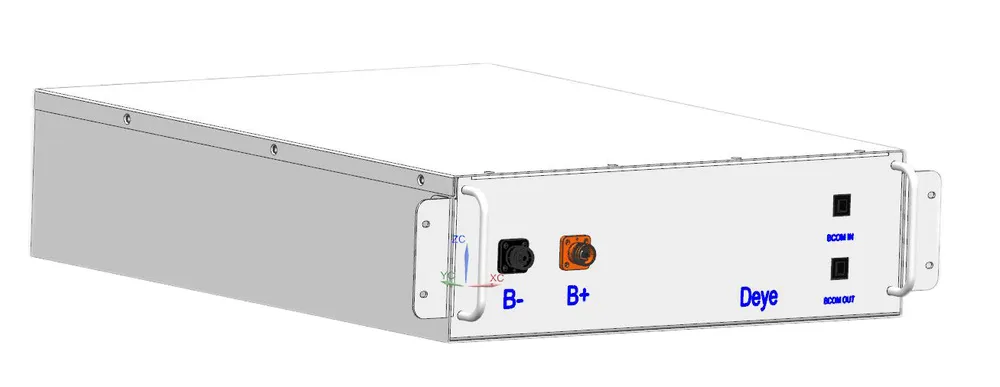
Inside
LFP cells, guarded by a BMS
Each module holds 5.12 kWh of LFP cells at 51.2 V. The battery management system protects against over-charge, over-discharge, over-current and high or low temperature, and balances each cell’s voltage. It loses little charge on the shelf: up to six months without charging.
- 5.12 kWhPer module
- 100 ANominal current
- 100%Recommended depth of discharge
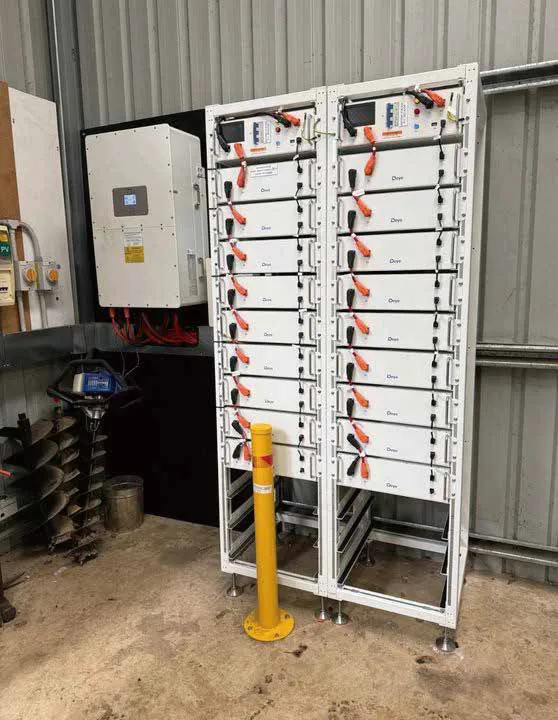
On site
Built for plant rooms and sheds
Deye rates the modules IP20, so the rack goes indoors, in a dry plant room, shed or garage. It charges from 0 to 55 °C and discharges from −20 to 55 °C. Deye supports remote monitoring and upgrades with its inverters.
- IP20Indoors
- −20 to 55 °CDischarging
- RemoteMonitoring and upgrades
Life and safety
≥ 6,000 cycles
At 25 °C and 0.5C charge and discharge, until it holds 70% of its capacity.
Protected by its BMS
Over-charge, over-discharge, over-current and temperature protection, with cell balancing.
Low self-discharge
Up to six months on the shelf without charging, and no memory effect.
IEC 62619 · UL 9540A
With UL 1973, VDE 2510-50 and UN38.3, on Deye’s brochure.
From Deye’s BOS-G brochure for Australia, in Documents.
Four to twelve modules
Deye’s BOS-G table for Australia: one stack in series. The highlighted row follows the calculator. Weights are the whole stack: modules, control box and rack. Deye’s table starts at three modules (153.6 V), below the 160 V our high-voltage hybrids start at.
| Modules | Deye model | Voltage | Energy | Rated power | Rack | Weight |
|---|---|---|---|---|---|---|
| 4 | BOS-G20 | 204.8 V166.4–233.6 V | 20.48 kWh | 20.48 kW | 9-layer | 240 kg |
| 5 | BOS-G25 | 256 V208–292 V | 25.6 kWh | 25.6 kW | 9-layer | 285 kg |
| 6 | BOS-G30 | 307.2 V249.6–350.4 V | 30.72 kWh | 30.72 kW | 9-layer | 330 kg |
| 7 | BOS-G35 | 358.4 V291.2–408.8 V | 35.84 kWh | 35.84 kW | 9-layer | 375 kg |
| 8 | BOS-G40 | 409.6 V332.8–467.2 V | 40.96 kWh | 40.96 kW | 9-layer | 420 kg |
| 9 | BOS-G45 | 460.8 V374.4–525.6 V | 46.08 kWh | 46.08 kW | 13-layer | 475 kg |
| 10 | BOS-G50 | 512 V416–584 V | 51.2 kWh | 51.2 kW | 13-layer | 520 kg |
| 11 | BOS-G55 | 563.2 V457.6–642.4 V | 56.32 kWh | 56.32 kW | 13-layer | 565 kg |
| 12 | BOS-G60 | 614.4 V499.2–700 V | 61.44 kWh | 61.44 kW | 13-layer | 610 kg |
Deye’s sizing for its 30 kW and 50 kW hybrids
| Inverter | 1 hour | 2 hours | 3 hours | 4 hours |
|---|---|---|---|---|
| 30 kWSUN-30K-SG01HP3-AU-BM3 | 6 modulesOne stack | 12 modulesOne stack | 18 modules2 stacks of 9 | 24 modules2 stacks of 12 |
| 50 kWSUN-50K-SG01HP3-AU-BM4 | 10 modulesOne stack | 20 modules2 stacks of 10 | 30 modules3 stacks of 10 | 40 modules4 stacks of 10 |
From the “Product Expansion” table in Deye’s BOS-G brochure for Australia (page 5): modules for one inverter running at full output. In a parallel system each inverter has its own battery set.
Which Deye high-voltage battery?
The two Deye high-voltage batteries in our range. They are separate families: a stack uses one, with its own control box.
| Feature | BOS-GM5.1This page | GB-L-Pro-Pack4.1-2Deye battery |
|---|---|---|
| Price | $2,009.00 incl. GST | Enquire |
| Storage | 5.12 kWh a module | 4 kWh a module |
| Stack | 4 to 12 modules in series, in a rack | 2 to 6 modules on a base |
| Enclosure | IP20, for indoors | IP65 |
| Control box | HVB750V/100A-EU | GB-LBS-Pro |
| Document | Deye’s brochure for Australia | Deye’s European brochure |
Build the stack
A BOS-G stack is designed as one: modules in series, one control box and a rack. Each part is a separate item, and we size them to your inverter’s battery range with you.
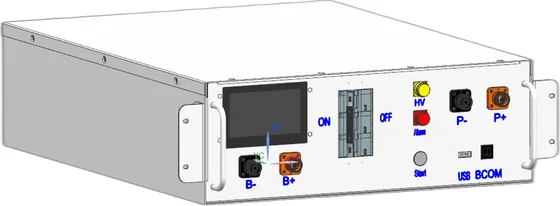
- One per stack, at the top of the rack
- Links the modules to the inverter
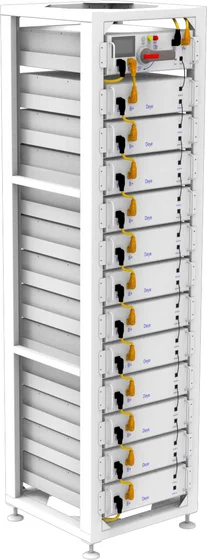
- 9 layers: up to eight modules and the control box
- 13 layers: up to twelve modules and the control box
- Optional door for the 9-layer rack
- Optional door for the 13-layer rack
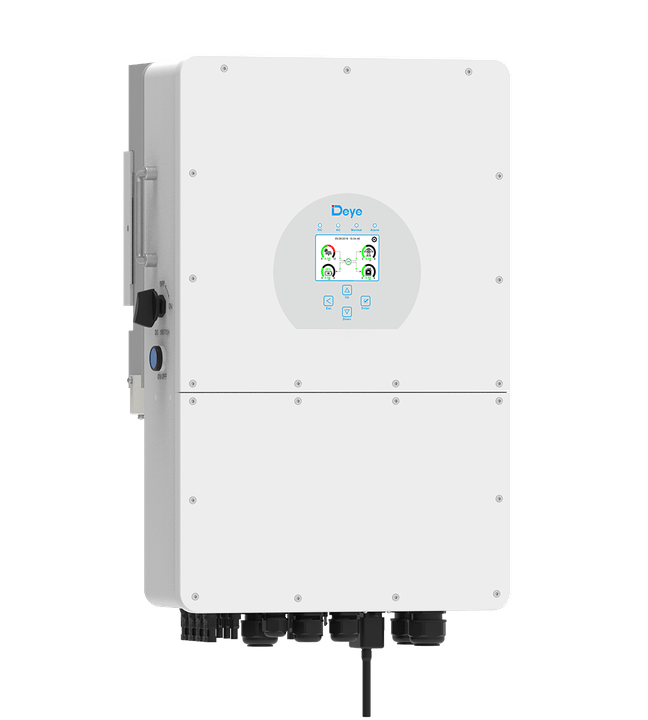
- 5 to 80 kW
Your installer confirms the final parts, quantity and layout for your site.
BOS-G stacks installed in Australia
BOS-G stacks with Deye’s 29.9 and 50 kW hybrids, from Deye Australia’s project cases.
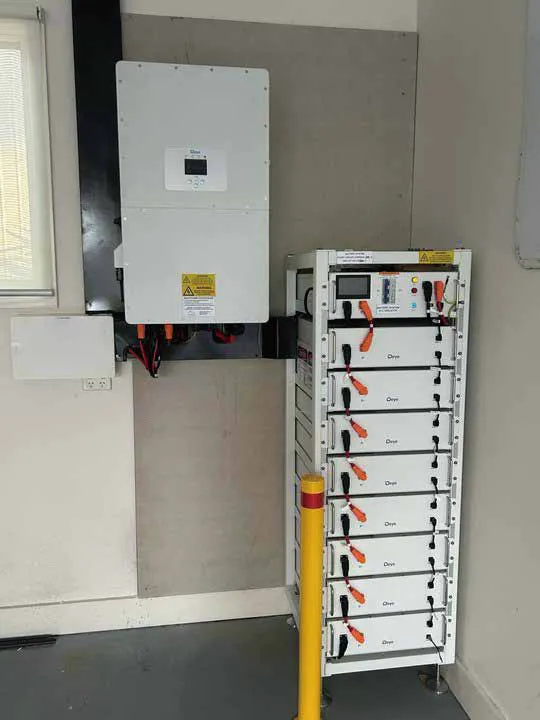
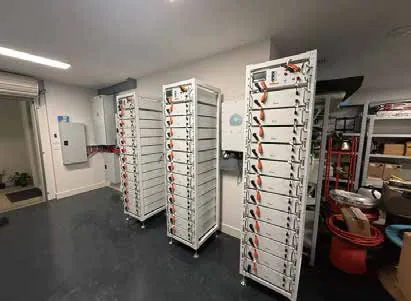
Photos: Deye Australia project cases, from Deye’s March 2026 Australian brochure.
What your electrician will do
- Plan the stackFour to twelve modules in series for our high-voltage hybrids, to suit the inverter’s battery range, with one control box and one rack for each stack.
- Set up the rackThe 9-layer rack takes up to eight modules, the 13-layer rack up to twelve, each with the control box at the top. Both go indoors, on a level floor.
- Fit and link the modulesEach module slides into the rack and links to the next in series with its short power and communication cables.
- Connect the inverterThe control box connects the stack to the inverter’s battery input. Deye lists 5 m power and communication cables for it.
- Commission itSwitch on the control box, then the inverter, and set the battery and work mode. A yellow light shows the high voltage is on.
BOS-GM5.1 specifications
Specifications below refer to the manufacturer document shown on this page. Check the document revision and exact model before specifying a system.
| Everest SKU | BOS-GM5.1 |
|---|---|
| Product type | High-voltage rack |
| Nominal storage capacity | 5.12 kWh |
| Battery system | High voltage |
| Cell chemistry | LiFePO₄ (LFP) |
|---|---|
| Nominal module voltage | 51.2 V |
| Capacity | 100 Ah |
| Charge / discharge current | 100 A nominal / 125 A peak discharge |
| Communication | CAN 2.0 / RS485 |
| Recommended charge / discharge current | 50 A |
| Recommended depth of discharge | 100% |
| Status lights | Yellow: high voltage on. Red: battery system alarm |
| Mounting | 19-inch BOS-G rack |
|---|---|
| Enclosure protection | IP20 |
| Dimensions (W × H × D) | 440 × 133 × 570 mm; see document for mounting exclusions |
| Approximate module weight | 45 kg |
| Modules in series | 3 to 12 (BOS-G15 to BOS-G60); at least 4 with our high-voltage hybrids |
|---|---|
| Stack voltage | 153.6 to 614.4 V nominal (124.8–700 V operating) |
| Stack energy | 15.36 to 61.44 kWh, all usable at Deye’s test conditions (100% depth of discharge, 0.2C, 25 °C) |
| Rated DC power, one stack | 15.36 kW (3 modules) to 61.44 kW (12) |
| Racks in parallel | Up to 16 |
| Control box | HVB750V/100A-EU: 120–750 V DC, 100 A nominal, 125 A maximum, IP20, 440 × 150 × 570 mm, 19 kg |
| Control box supply | 12 V DC (± 2%), 4.15 A |
| Racks | 9-layer: eight modules and the box, 530 × 1,629 × 602 mm, 41 kg. 13-layer: twelve and the box, 530 × 2,219 × 602 mm, 51 kg |
| Cables | Each module comes with a 110 mm communication cable and a 200 mm power cable. Deye lists 5 m cables as options: EPCable5.0 and ENCable5.0 (1,000 V, 4 AWG) to the inverter’s positive and negative, EPWR Cable5.0 to an external 12 V DC supply, and ECOM Cable5.0 for communication. |
| Cycle life | ≥ 6,000 cycles (25 ± 2 °C, 0.5C charge and discharge, to 70% of capacity) |
|---|---|
| Operating temperature, charging | 0 to 55 °C |
| Operating temperature, discharging | −20 to 55 °C |
| Storage temperature | 0 to 35 °C |
| Humidity | 5–85% RH |
| Altitude | Up to 2,000 m |
| Self-discharge | Up to 6 months on the shelf without charging |
| Standards | CE, IEC 62619, VDE 2510-50, UL 1973, UL 9540A, UN38.3 |
Product selection and installation must be checked for your site.
BOS-GM5.1 spec sheets and documents
Deye’s BOS-G brochure for Australia, with the stack table, the parts and Deye’s sizing, and Deye’s BOS-G datasheet. Read them here, or download a copy.
Open as PDF: Deye BOS-G High-Voltage Battery — Australian brochure · Deye BOS-G High-Voltage Battery — datasheet
The document will load when you reach this section.
Pairs with
Build the full system- 5 kWSUN-5K-SG01HP3-AU-AM2
- 6 kWSUN-6K-SG01HP3-AU-AM2
- 8 kWSUN-8K-SG01HP3-AU-AM2
- 10 kWSUN-10K-SG01HP3-AU-AM2
- 12 kWSUN-12K-SG01HP3-AU-AM2
- 15 kWSUN-15K-SG01HP3-AU-AM2
- 20 kWSUN-20K-SG01HP3-AU-AM2
- 25 kWSUN-25K-SG01HP3-AU-AM2
- 29.9 kWSUN-29.9K-SG01HP3-AU-BM3
- 40 kWSUN-40K-SG01HP3-AU-BM4
- 50 kWSUN-50K-SG01HP3-AU-BM4
- 60 kWSUN-60K-SG02HP3-AU-EM6
- 70 kWSUN-70K-SG02HP3-AU-EM6
- 80 kWSUN-80K-SG02HP3-AU-EM6
Your installer confirms the final system and site requirements.
Questions about this battery?
Tell us about your inverter, or the one you have in mind, your site and how long the battery should last. The model number travels with your enquiry.
How many modules do I need?
At least four in series for our high-voltage hybrids, whose battery range starts at 160 V, and up to twelve in one stack: 20.48 to 61.44 kWh. Deye’s table sizes stacks for its 30 kW and 50 kW hybrids by hours at full output.
What else does a stack need?
One HVB750V/100A-EU control box at the top of the rack, and a rack: the 9-layer rack takes up to eight modules, the 13-layer rack up to twelve. Each is a separate item. Deye lists 5 m cables to the inverter as options.
Which inverters work with it?
Deye’s high-voltage hybrids: our three-phase 5–25 kW models (160–700 V battery range) and 29.9–50 kW models (160–800 V). Deye Australia’s project photos show it with the SUN-29.9K-SG01HP3-AU and SUN-50K-SG01HP3-AU.
Can I use it as a 48 V battery?
No. A module is 51.2 V, but BOS-G modules work in series in a high-voltage stack with their control box. They are not a low-voltage home battery.
How much power can a stack supply?
Deye’s table rates a stack from 20.48 kW for four modules to 61.44 kW for twelve, at 100 A nominal, with 125 A peaks for two minutes at 25 °C. The inverter’s own rating also limits what runs at once.
How much of it can I use?
Deye’s brochure for Australia lists all of a stack’s energy as usable at its test conditions (100% depth of discharge, 0.2C, 25 °C) and recommends 100% depth of discharge. Usable system energy depends on the settings.
Where does it go?
Indoors: Deye rates the modules IP20. The rack needs a dry, level floor, in a plant room, shed or garage. It charges from 0 to 55 °C and discharges from −20 to 55 °C.
How long will it last?
Deye lists at least 6,000 cycles at 25 °C, charging and discharging at 0.5C, until it holds 70% of its capacity.
Can I add more later?
Deye allows up to 16 racks in parallel. Within a stack, the module count must suit the inverter’s battery range, so tell us what you have before you add to it.
Is this a complete battery system?
This listing is a battery module or enclosure. The matching inverter, controller or PDU, base or rack, cables and installation requirements depend on the battery family.
Can I mix it with a different battery family?
Do not assume different Deye battery families can be mixed. Send Everest the exact models and details of the existing system for a compatibility check.
Can I order this on its own?
Yes. Add it to your cart, continue to checkout and place your order. We confirm stock and email you a secure payment link, normally within one business day. Nothing is charged until you pay the link. Delivery is free on inverter or battery orders and quoted for parts-only orders. Any installation is arranged separately.
Can Everest help with compatibility?
Yes. Include the model numbers of your existing inverter, batteries and any other system parts in your enquiry. Matching a brand or power rating alone does not confirm compatibility.
More Deye batteries
View the range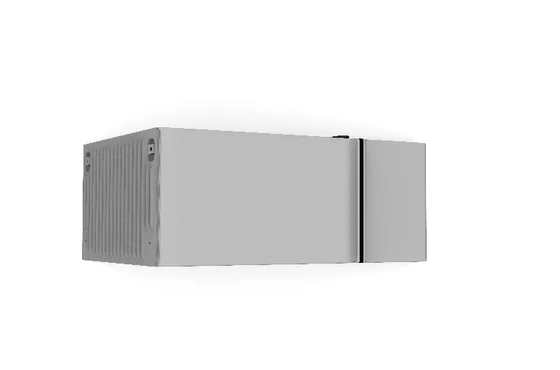 High-voltage moduleGB-L-Pro-Pack4.1-2
GB-L-Pro-Pack4.1-2
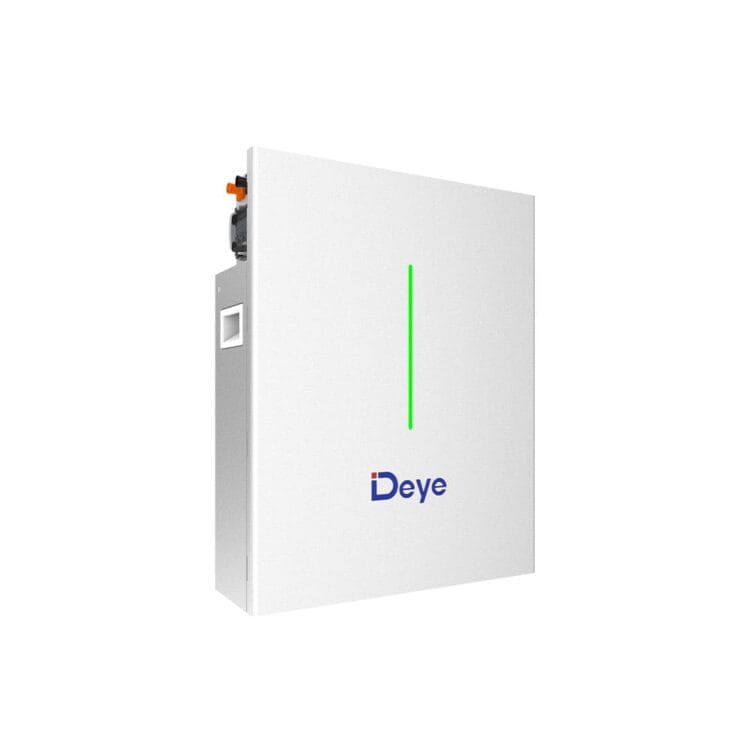
 StackableAI-W5.1-B
AI-W5.1-B
 Floor / wall mountRW-F10.2
RW-F10.2
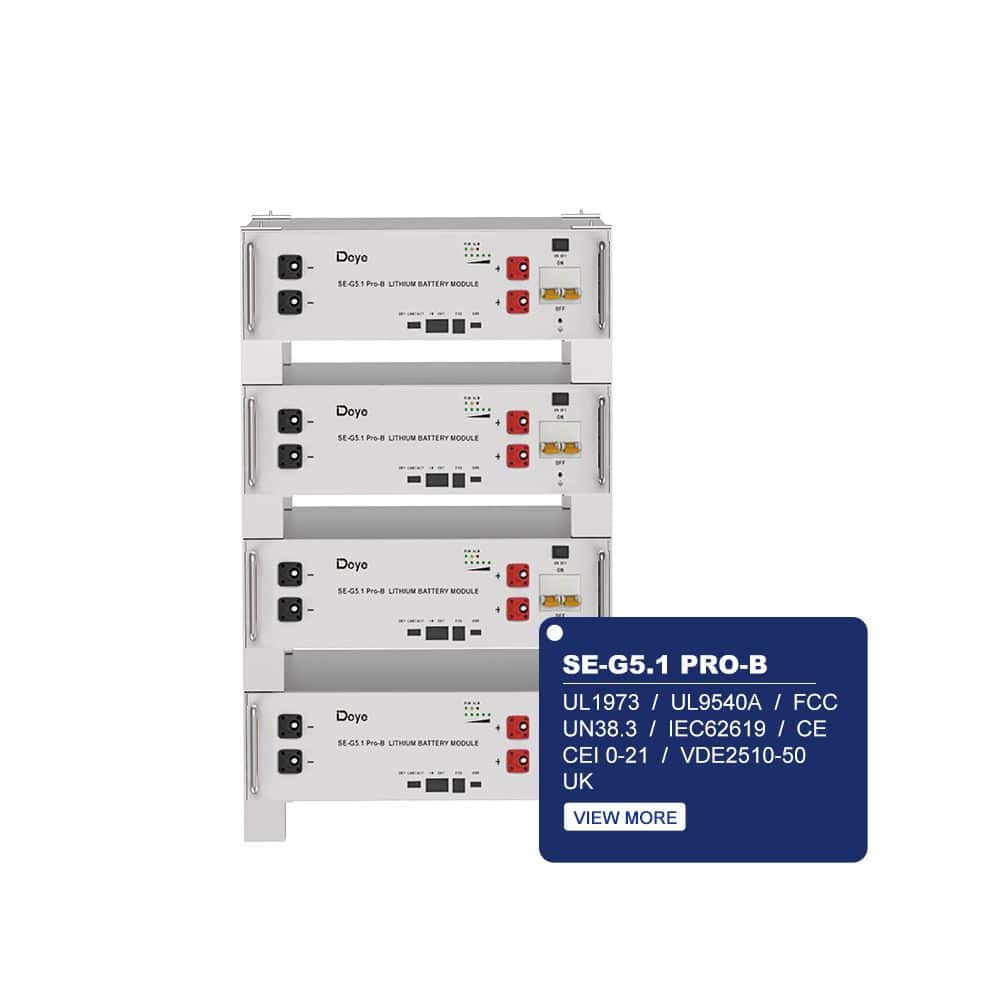 Rack mountSE-G5.1Pro-B
SE-G5.1Pro-B