


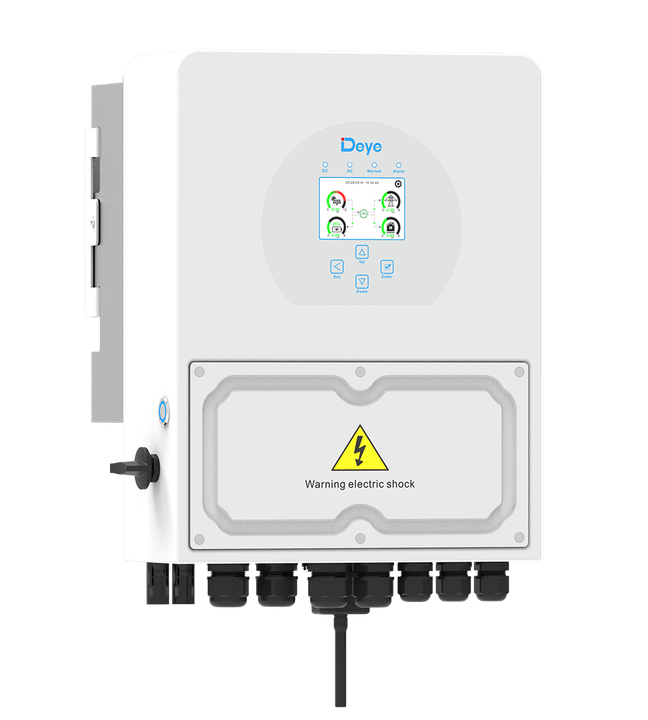
Deye product-family image, renders and Australian project photos. Check the model number for the exact item.
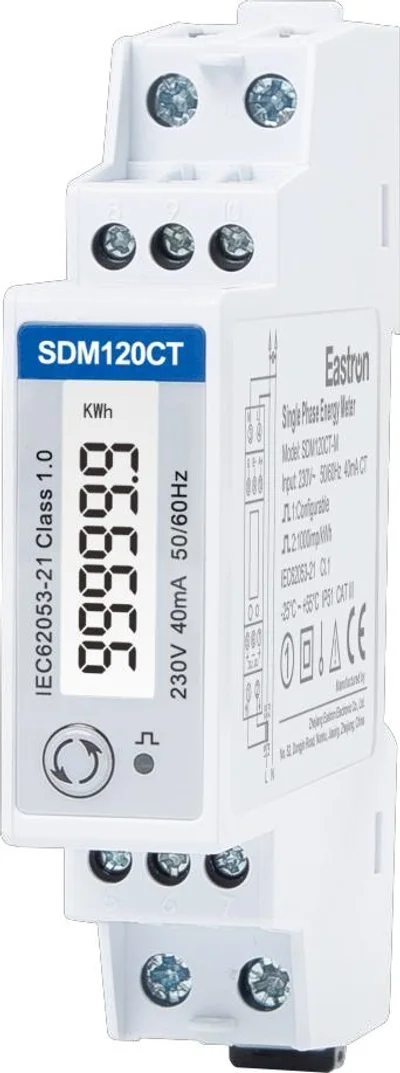
Add what you need to the same order. Your installer confirms quantities and the final layout.
Deye Hybrid Inverters · Single phase
Deye 5kW Hybrid Inverter
SUN-5K-SG04LP1-AU Single phase
The SUN-5K-SG04LP1-AU is a 5 kW single-phase hybrid inverter for homes combining solar with a compatible 40–60 V battery.
Need three phase? See the 5 kW three-phase modelBatteries and other system components sold separately.
- Owned and operated by Aussie electricians
- Advice from the electricians who install Deye
Place your order and we email a secure payment link, normally within one business day. Nothing is charged until you pay the link. Free delivery included. Installation is separate. Online Deye Price Beat Guarantee — seen it cheaper? Tell us before you order.
Want a licensed electrician with Deye experience to install this? Click to connect with a Deye installer
What will it run at once during a blackout?
In a blackout, your solar and battery are the only supply, so the inverter’s kW is the most your backup circuits can draw at once. The battery’s kWh is how long that lasts. Pick what you would run together to compare the sizes.
- 3 kWOver by 0.05 kWSmallest that covers it
- 3.6 kWCovers it · 0.55 kW spareSmallest that covers it
- 5 kWCovers it · 1.95 kW spareSmallest that covers itThis page
- 6 kWCovers it · 2.95 kW spareSmallest that covers it
- 8 kWCovers it · 4.95 kW spareSmallest that covers it
- 10 kWCovers it · 6.95 kW spareSmallest that covers it
- 12 kWCovers it · 8.95 kW spareSmallest that covers it
- 16 kWCovers it · 12.95 kW spareSmallest that covers it
This 5 kW model runs all of it with 1.95 kW to spare. The 3.6 kW model is the smallest that does.
A 10 kWh battery runs all of this for about 2 h 45 min on its own.
Fridge, air-con and pump motors draw extra for a moment as they start. Deye rates this model for twice its output for 10 seconds, which covers that. A kettle, oven or heater draws its full power for minutes, so it counts in full.
An estimate, not a guarantee. Appliance figures are typical running power. Only circuits wired to the inverter’s backup port run in a blackout; while the grid is on, it supplies anything above the inverter’s rating. The battery estimate assumes about 85% of its nominal kWh reaches your appliances. Each battery also has its own output limit, so we check the battery against what you want to run.
Three ways to set it up
A hybrid inverter runs your solar, battery, home and grid together. Here is how it fits, depending on what you have now. We’ll confirm the right one for your home.
New solar and battery
Solar, battery and grid in one
Your panels connect straight to the inverter’s own solar inputs. It runs your home from solar, stores the surplus in the battery and sends what is left to the grid.
- Solar powers your home first
- The battery covers your evenings
- Six time-of-use periods for cheaper power
You’ll need a Deye low-voltage battery. Your installer adds a CT or meter at the main switch so the inverter can see what your home uses.
Existing solar
Add a battery to the solar you have
AC coupling connects your existing solar inverter to the hybrid, so its surplus solar charges the battery. Keep your panels and your current inverter.
- Keep your panels and current inverter
- Surplus solar charges the battery
- New panels can go on the hybrid too
We check your existing inverter, switchboard and export limit before you order.
Blackouts and generators
Backup, off-grid and generator
If the grid goes down, the inverter keeps your backup circuits running from solar and battery. A generator can charge the battery when the sun can’t.
- Backup circuits stay on
- Battery charging from a generator
- Off-grid, and up to 16 in parallel
Your electrician moves the circuits you want kept on to the inverter’s backup port. It is not the whole house unless the system is designed that way.
How it runs your day
Time of use
Up to six windows a day to charge from the grid or a generator, or to run from the battery, each down to a battery level you set. Choose the days they apply.
Load first or battery first
Solar can power your home before it charges the battery, or fill the battery first.
Export control
Zero export, or an export limit, measured by the CT or a meter at your main switch.
Grid peak shaving
Caps what your home draws from the grid; solar and the battery cover the rest.
Your installer sets these on the inverter’s touch screen. Deye’s user manual in Documents describes each setting.
Built around your energy needs
The SUN-5K-SG04LP1-AU is a 5 kW single-phase hybrid inverter for homes combining solar with a compatible 40–60 V battery. It can manage solar generation, battery charging and household power in one unit, with an LCD for checking the system locally. Choose this model by its power rating, supply phase and battery voltage class. Battery capacity is a separate choice: a 5 kW inverter does not automatically mean a 5 kWh battery.
Battery
Built around a low-voltage battery
It charges and discharges a 40–60 V lithium battery at up to 120 A, following the battery’s own management system (BMS). Deye’s datasheet also lists lead-acid.
- 40–60 VBattery range
- 120 ACharge and discharge
- 6Time-of-use periods
Solar
Two solar inputs
Two MPPT trackers run separate strings of panels, so roofs facing different ways each work at their best. Deye lists up to 7,500 W of solar input for this model, and up to 10,000 W of panels connected. Panel strings must also suit its voltage and current limits.
- 2MPPT trackers
- 7.5 kWSolar input
- 125 VStart-up voltage
At home
Built to live on a wall
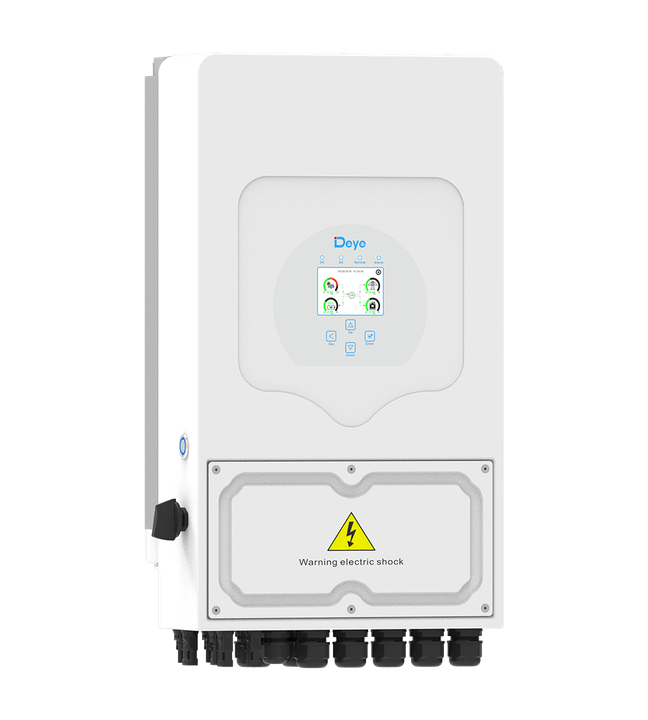
An IP65 enclosure with a noise rating of <30 dB. 17 kg and 330 × 433 × 228 mm, so it sits beside the battery indoors, or outdoors out of direct sun. Check and change settings on its colour touch screen, or in the Deye Cloud app through a Deye data logger.
- IP65Enclosure
- <30 dBNoise
- 17 kg330 × 433 × 228 mm
Protection built in
Surge protection
Type II on the solar (DC) and grid (AC) sides.
Anti-islanding
Disconnects from the grid when the grid goes down, as Australian grid rules require.
Residual current detection
Watches for current leaking to earth.
Insulation monitoring
Checks the solar wiring’s insulation to earth.
Overload and short circuit
Output over-current, over-voltage and short-circuit protection.
Reverse polarity
Protects against solar strings connected the wrong way round.
From the protection list in Deye’s datasheet for this range. Arc fault protection (AFCI) is listed as optional, so ask us whether your unit has it. The datasheet lists AS/NZS 4777.2, the Australian standard for grid-connected inverters.
3.6, 5 or 6 kW?
The sizes either side of this one, from Deye’s datasheets.
| Feature | 3.6 kWSUN-3.6K-SG04LP1-AU | 5 kWSUN-5K-SG04LP1-AU · this page | 6 kWSUN-6K-SG04LP1-AU |
|---|---|---|---|
| Price | incl. GST | $1,549.00 incl. GST | incl. GST |
| Rated output | 3.6 kW | 5 kW | 6 kW |
| Solar input | 5,400 W | 7,500 W | 9,000 W |
| Panels you can connect | 7,200 W | 10,000 W | 12,000 W |
| Solar trackers (MPPT) | 2 (1 + 1 strings) | 2 (1 + 1 strings) | 2 (1 + 1 strings) |
| Battery charge / discharge | 90 A | 120 A | 135 A |
| Grid-to-home passthrough | 35 A | 35 A | 40 A |
| Off-grid peak | 2 × rated power for 10 seconds | 2 × rated power for 10 seconds | 2 × rated power for 10 seconds |
| Size and weight | 330 × 433 × 228 mm, 17 kg | 330 × 433 × 228 mm, 17 kg | 330 × 433 × 228 mm, 17 kg |
| Datasheet | Names this exact model | Names this exact model | Names this exact model |
Batteries in our range
Deye low-voltage batteries we stock. Keep to one battery family in a bank, and we check the battery and quantity against your inverter before you pay.
- 5.12 kWh nominal
- Usable 5.12 kWh
- Stacked; wall or floor installation
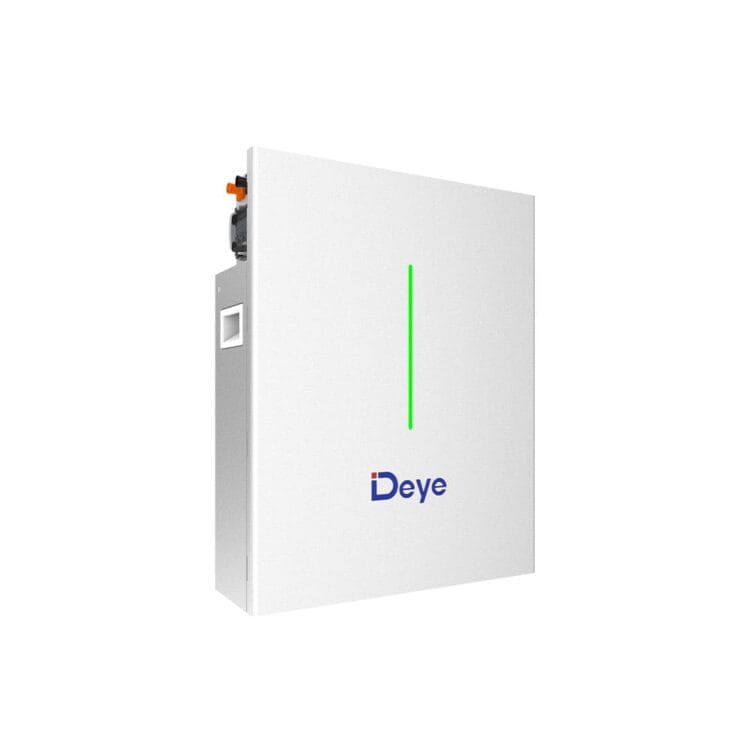
- 10.2 kWh nominal
- Usable 9.2 kWh
- Wall mounted or floor standing
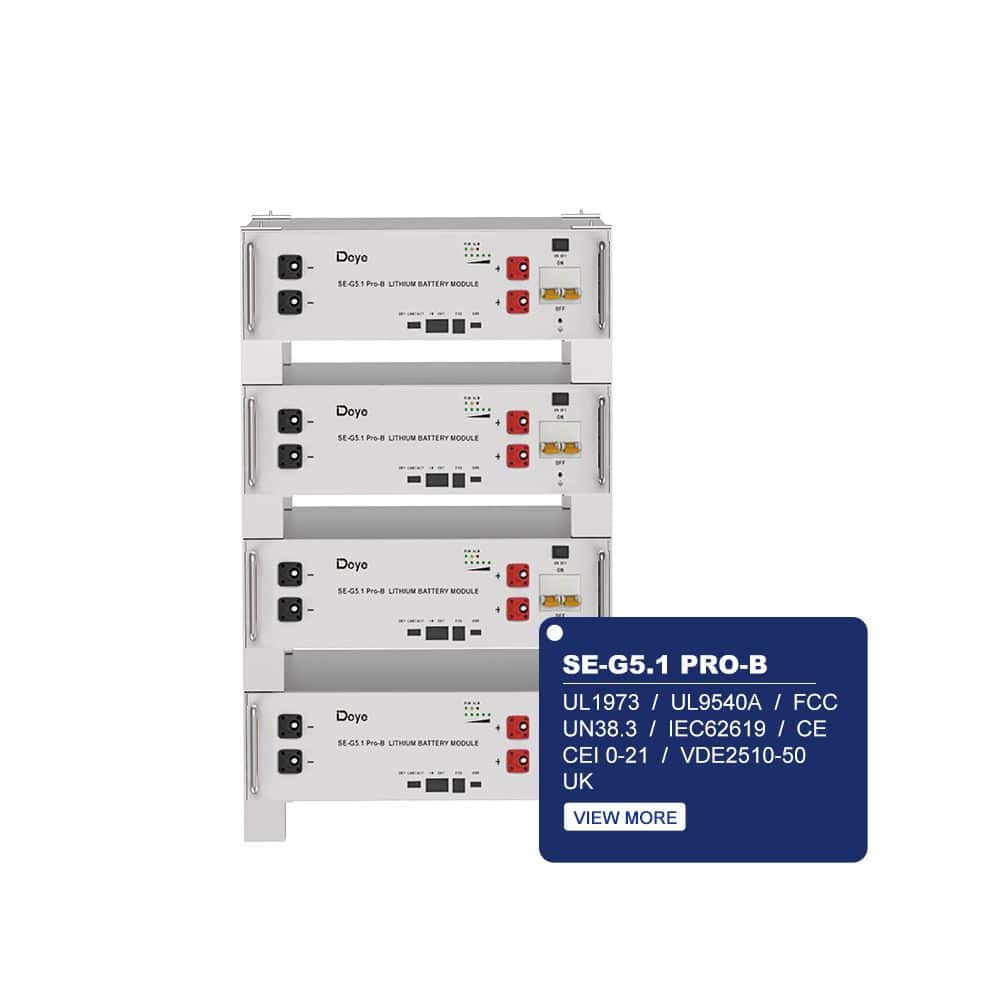
- 5.12 kWh nominal
- Usable 4.6 kWh
- 19-inch rack, wall or floor mounted
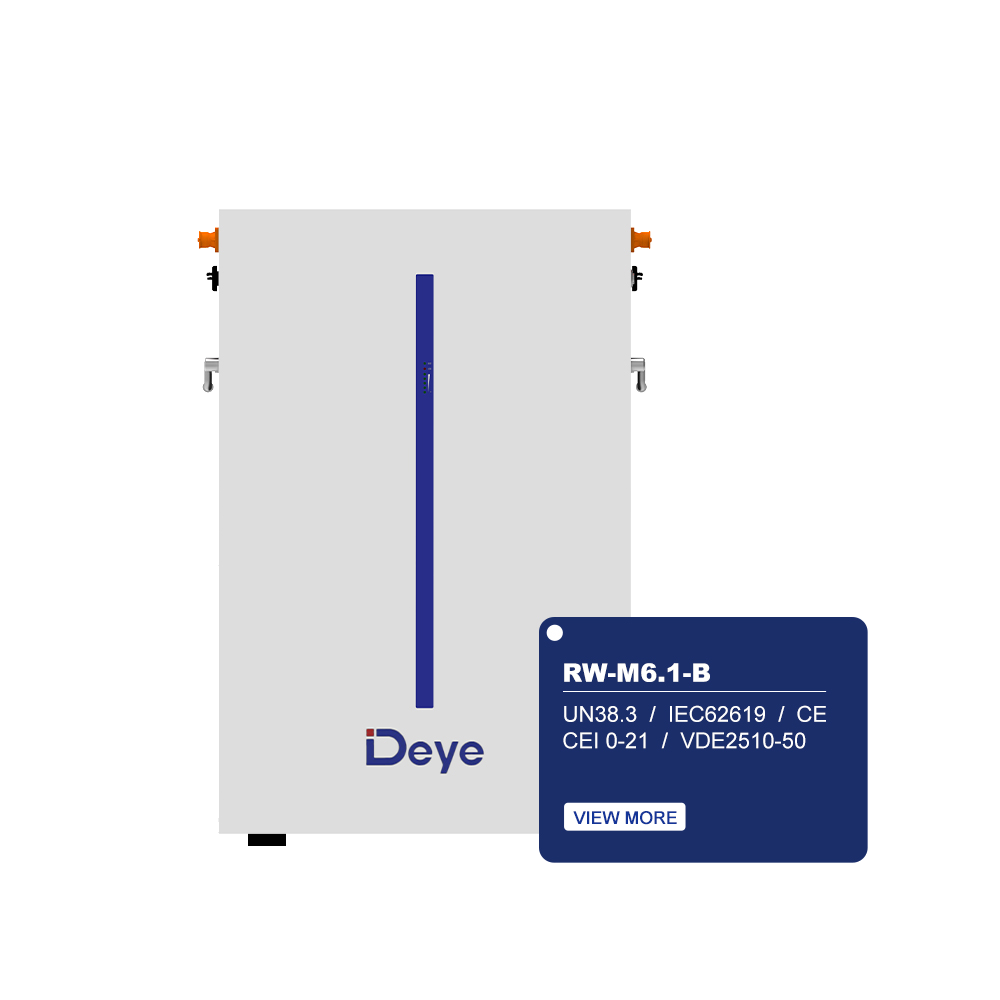
- 6.14 kWh nominal
- Usable 5.53 kWh
- Wall mounted or floor mounted
Your installer confirms the final battery, quantity and layout for your site.
Deye hybrids installed in Australia
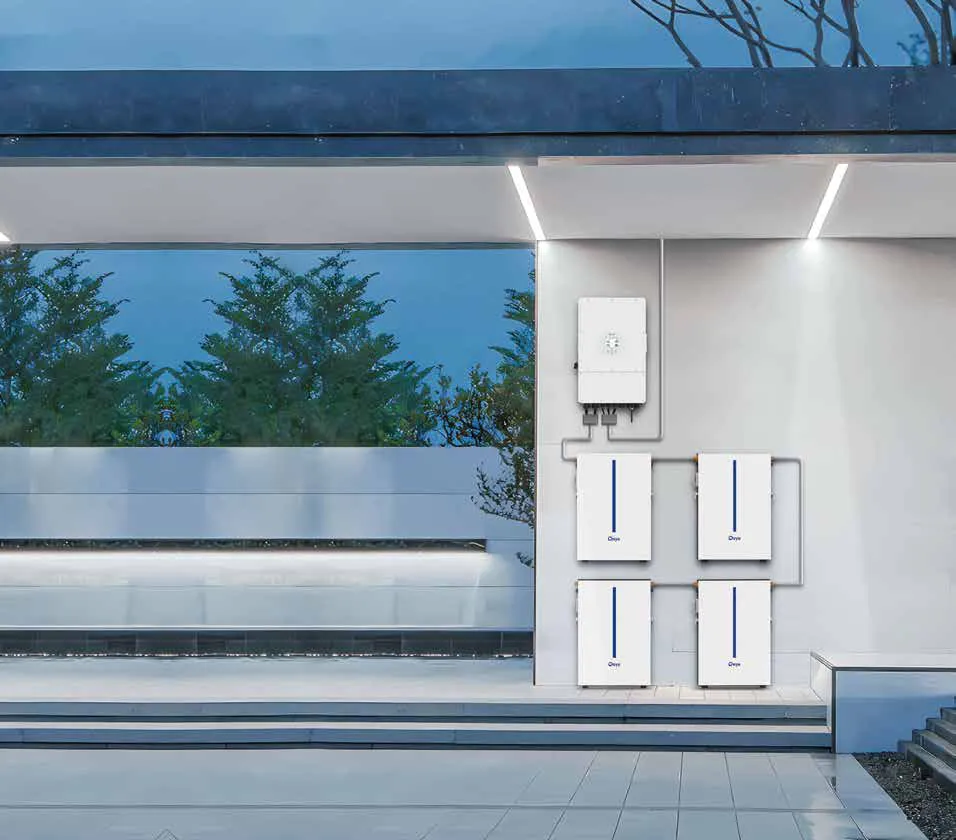
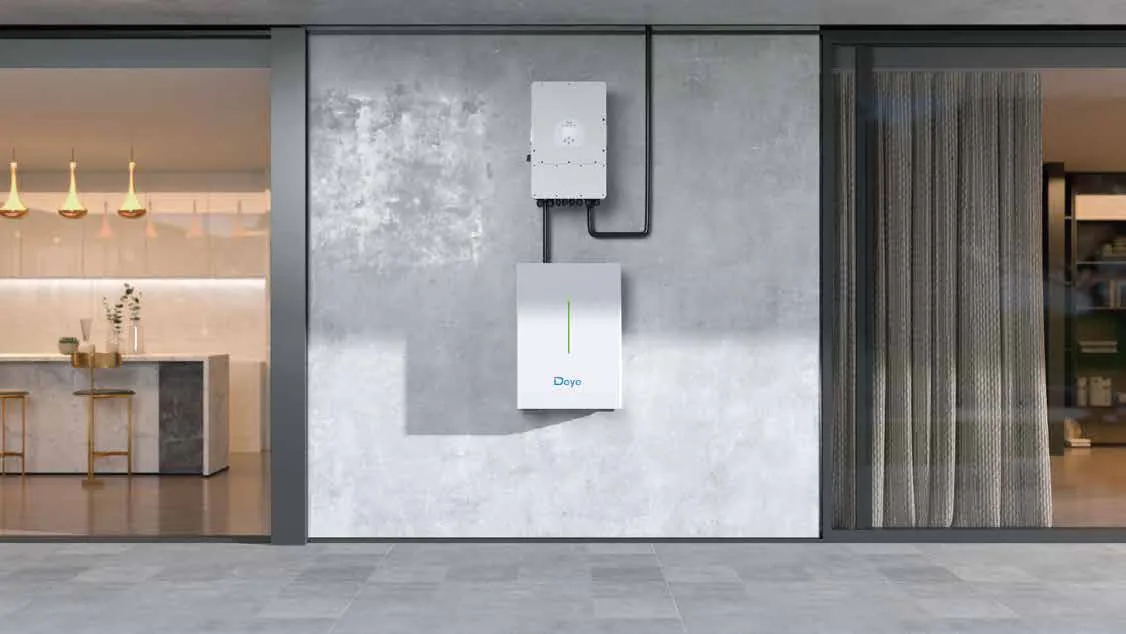
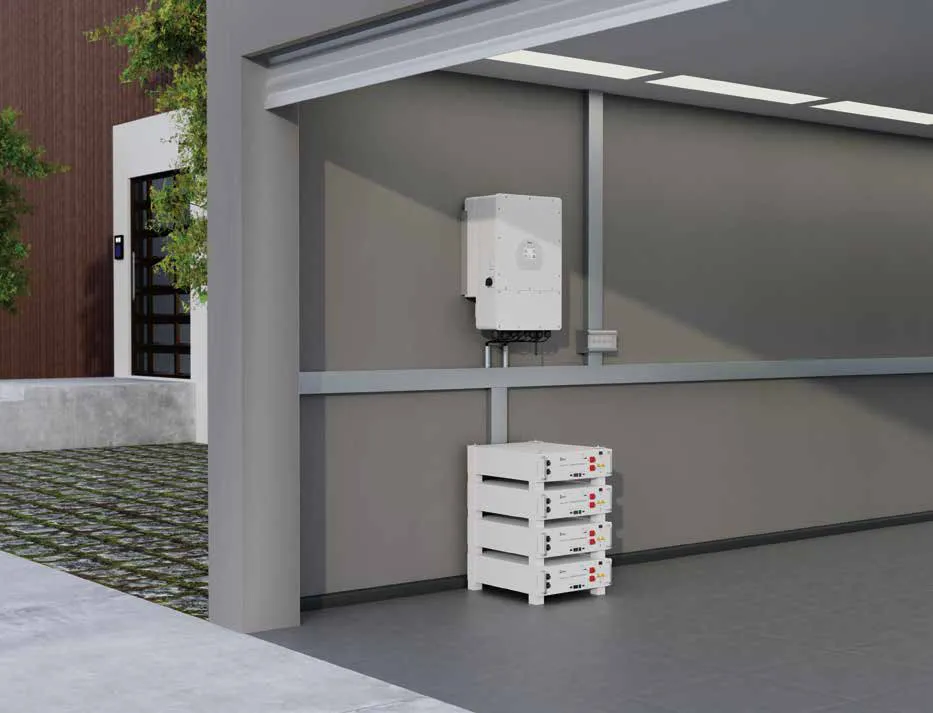
Deye hybrids and batteries in Australian homes and sheds, from Deye Australia’s project cases.
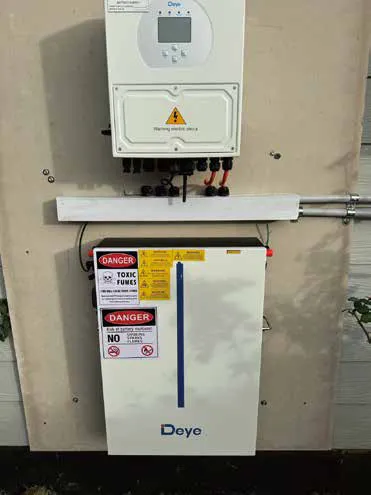
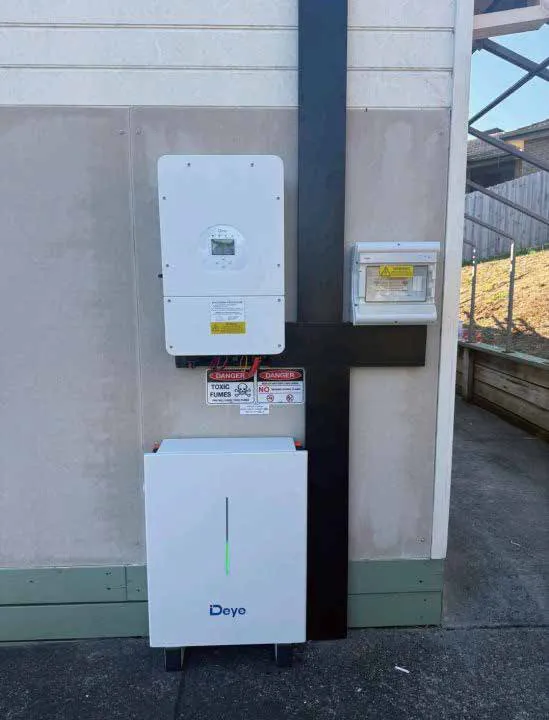
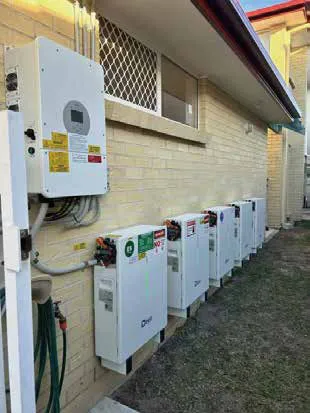
Photos: Deye Australia project cases, from Deye’s March 2026 Australian brochure.
What your electrician will do
- Check your supply and switchboardSingle or three phase, room for the breakers, and your network’s export and connection rules.
- Mount the inverterOn a solid wall, out of direct sun, with the clearances in Deye’s manual.
- Connect solar, battery and CTSolar strings to the MPPT inputs, the battery with its communication cable, and a CT or meter at the main switch.
- Wire the grid and backup circuitsThe grid to the grid port and the circuits you want kept on to the backup port, each with its own breaker.
- Commission itSet the grid settings your network requires, the battery type and the work mode, then pair a data logger for the app.
SUN-5K-SG04LP1-AU specifications
Specifications below refer to the manufacturer document shown on this page. Check the document revision and exact model before specifying a system.
| Everest SKU | SUN-5K-SG04LP1-AU |
|---|---|
| Product type | Wall mount |
| Power supply | Single phase |
| Catalogue power rating | 5 kW |
| Battery system | Low voltage |
| Maximum PV input power | 7500 W |
|---|---|
| Maximum PV access power | 10000 W |
| Maximum PV input voltage | 500 V |
| MPPT voltage range | 150–425 V |
| MPPTs / strings per MPPT | 2 / 1 + 1 |
| Maximum PV operating current | 13 + 13 A |
| Maximum PV short-circuit current | 19.5 + 19.5 A |
| Start-up voltage | 125 V |
| Battery voltage range | 40–60 V |
|---|---|
| Maximum charge / discharge current | 120 A |
| Rated AC active power | 5000 W |
|---|---|
| Rated AC current | 21.7 A |
| Continuous AC passthrough | 35 A |
| Off-grid peak power | 2 × rated power for 10 seconds |
| Maximum conversion efficiency | 97.6% |
| Enclosure rating | IP65 |
|---|---|
| Cabinet dimensions (W × H × D) | 330 × 433 × 228 mm; excludes connectors and brackets |
| Weight | 17 kg |
| Cooling | Natural cooling |
| Noise | <30 dB |
| Connection suitability | Installer and network approval required |
| Battery chemistry supported | Lead-acid or lithium-ion; compatible BMS required |
|---|---|
| Battery inputs | 1 |
| Rated PV input voltage | 370 V |
| Rated AC voltage | 230 / 240 V |
| Grid frequency / range | 50 Hz / 45–55 Hz |
| Power factor adjustment | 0.8 leading to 0.8 lagging |
| Current distortion (THDi) | <3% of nominal power |
| Euro efficiency | 96.5% |
| MPPT efficiency | >99% |
| Operating temperature | −40 to +60 °C; derating above 45 °C |
| Permissible altitude | 2000 m |
| Communication interfaces | Wi-Fi, RS485, CAN |
| Display | LCD |
| Surge protection | Type II on DC and AC |
| AFCI | Optional; confirm inclusion |
Product selection and installation must be checked for your site.
SUN-5K-SG04LP1-AU spec sheets and documents
Deye’s datasheet and installation manual for this model. Read them here, or download a copy.
Open as PDF: Deye 3–6kW Single-Phase Hybrid Inverter — datasheet · Deye 3–6 kW single-phase installation manual
The document will load when you reach this section.
Pairs with
Build the full systemAdd what you need to the same order. Your installer confirms quantities and the final layout.
Questions about this inverter?
Tell us about your supply, your solar and the battery you have in mind. The model number travels with your enquiry.
What size inverter do I need?
Size it to what your home runs at once, and to your solar. 5 kW is the most it supplies at once from solar and battery; the check on this page compares the sizes. Solar is the other limit: Deye lists up to 7,500 W of solar input for this model and up to 10,000 W of panels connected. We confirm the size against your switchboard, your network’s rules and your battery.
What is the difference between kW and kWh?
5 kW is the inverter’s power: how much it supplies at once. A battery’s storage is measured in kWh: how long it lasts. For example, a 10 kWh battery runs a 2 kW load for about four hours.
Can I add a battery to the solar I already have?
Yes. AC coupling connects your existing solar inverter to this hybrid, so its surplus solar can charge the battery. You keep your panels and inverter, and new panels can go on its own solar inputs. We check your existing inverter, switchboard and export limit first.
Will it keep my power on in a blackout?
It keeps the circuits wired to its backup port running from solar and battery. Your electrician chooses those circuits, so it is not the whole house unless the system is designed that way. It supplies up to 5 kW at once, with a peak of twice its rating for 10 seconds while motors start.
Can it charge the battery from the grid at cheaper times?
Yes. Six time-of-use periods let your installer set when the battery charges from the grid or a generator, and when it powers your home, each with its own battery level.
Can I limit what I send to the grid?
Yes. Zero export and export limits work with the CT or meter at your main switch. Your installer sets the limit your network allows.
Which batteries work with it?
Deye low-voltage lithium batteries. We stock the AI-W5.1-B, RW-F10.2, SE-G5.1 Pro-B and RW-M6.1-B, and we check the battery and quantity against your inverter before you pay. Deye’s datasheet also lists lead-acid.
My home has three-phase power. Can I use this?
Yes, on one phase, within your network’s limits. A three-phase model shares its output across all three phases instead. Ask us which suits your switchboard.
Can I add another inverter later?
Yes. Deye lists up to 16 of these in parallel, on-grid or off-grid, for more power. A parallel system is set up as one, so plan it with us.
Can I connect a generator?
Yes. Deye lists generator charging for this range, so a generator can charge the battery through the inverter. The inverter can also start the generator for you through its dry contact.
Can it be installed outside?
Yes. It is rated IP65. Deye asks for a spot out of direct sun and rain, with the clearances in its manual.
How do I check on it?
On its colour touch screen, or in the Deye Cloud app through a Deye data logger. Ask us which logger suits your inverter.
Is this the Australian model?
Yes. Deye’s datasheet lists SUN-5K-SG04LP1-AU by this exact model number, with AS/NZS 4777.2, the Australian standard for grid-connected inverters.
Does this include batteries?
This page is for the inverter. Batteries, bases, cabling and installation are quoted separately unless Everest explicitly includes them in your system quotation.
Can I order this on its own?
Yes. Add it to your cart, continue to checkout and place your order. We confirm stock and email you a secure payment link, normally within one business day. Nothing is charged until you pay the link. Delivery is free on inverter or battery orders and quoted for parts-only orders. Any installation is arranged separately.
Can Everest help with compatibility?
Yes. Include the model numbers of your existing inverter, batteries and any other system parts in your enquiry. Matching a brand or power rating alone does not confirm compatibility.
More Deye Hybrid Inverters
View the rangeWall mountDeye 6kW Hybrid InverterSUN-6K-SG04LP1-AU
Wall mountDeye 3.6kW Hybrid InverterSUN-3.6K-SG04LP1-AU
Wall mountDeye 3kW Hybrid InverterSUN-3K-SG04LP1-AU
 Wall mountDeye 8kW Hybrid Inverter
SUN-8K-SG05LP1-AU